
Sink Smells Like Rotten Eggs? How to Find the Source and Fix It
A sink that smells like rotten eggs has one of two sources: the water or the drain. Fill a glass, step away and smell it. If the glass smells, it's the water. If not, it's the drain. Here's how to fix each.
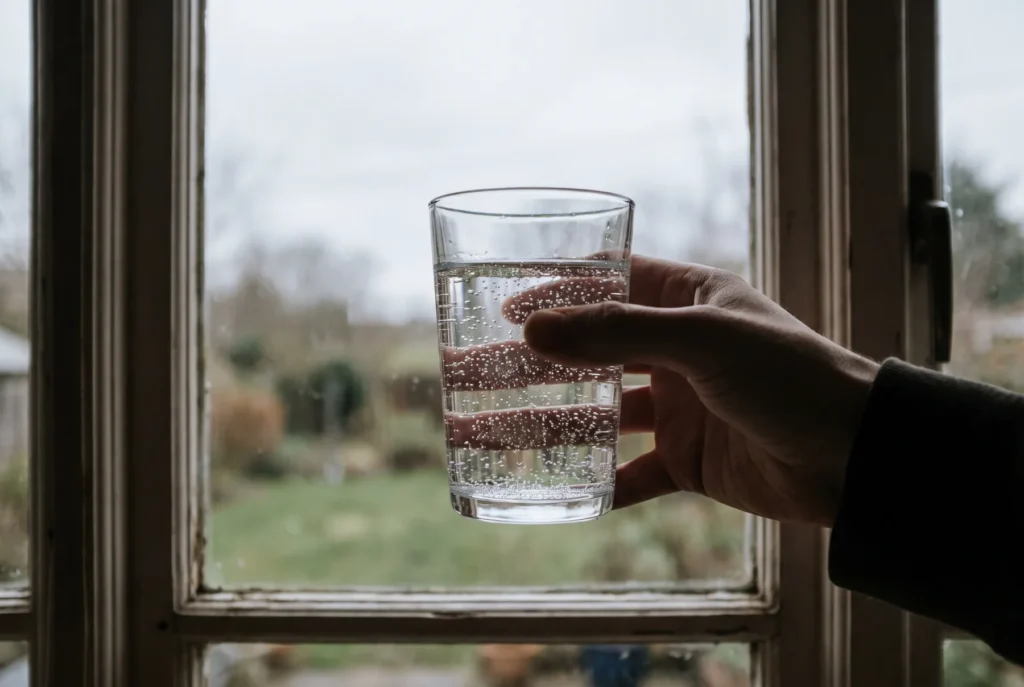
Likely causes
- Dry or dirty drain trap
- Sewer gas from a clog or blocked vent
- Water heater anode rod (hot water only)
- Bacteria in the well or pipes
- Hydrogen sulfide in the groundwater
Tests to order
- Glass test at home
- Hydrogen sulfide (tested on site)
- Sulfate
- Iron and manganese
- Total coliform
Treatment options
- Run and clean the drain
- Aluminum anode rod for hot water smell
- Shock chlorination for bacteria
- Carbon filter under 1 mg/L
- Aeration or oxidizing filter for higher levels
Short answer: when your sink smells like rotten eggs, the smell is coming from one of two places: the water or the drain. Water that smells is usually hydrogen sulfide gas from your well or water heater. A drain that smells is usually sewer gas or buildup in the pipe under the sink. A simple glass test tells you which one you’re dealing with in under a minute, and the fix is very different for each.
Is it the water or the drain? The glass test
This is the most useful minute you’ll spend on the problem. It stops you from cleaning a drain when the water is the culprit, or buying a filter when the drain is.
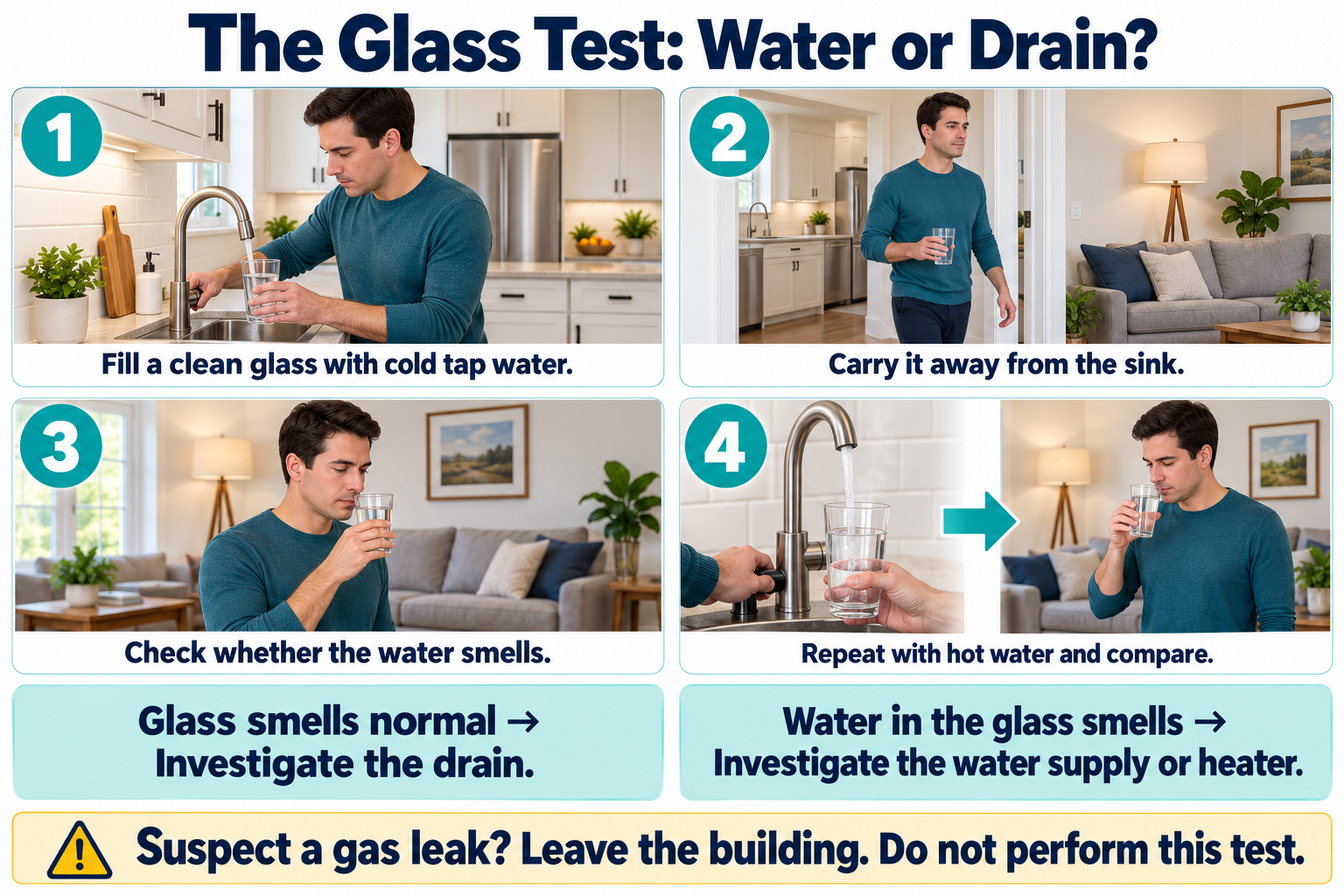
- Fill a glass from the cold tapLet it run for a few seconds first.
- Walk to another roomGet away from the sink so the drain can’t fool your nose.
- Smell the glassSwirl it gently and take a sniff.
- Repeat with hot waterThen compare the two.
| What you find | Where the smell comes from | Jump to |
|---|---|---|
| Glass smells fine, but the sink still smells | The drain | Drain fixes |
| Only the hot water glass smells | The water heater | Water heater fix |
| Both glasses smell, and it fades after the tap runs a while | Bacteria in the well, tank or pipes | Shock the well |
| Both glasses smell, and it never fades | Hydrogen sulfide in the groundwater | Treatment by level |
| Only one sink smells, and it’s rarely used | A dry drain trap | Drain fixes |
| Smell all over the house, not just at sinks | Sewer line, plumbing vent or a gas leak | Check for gas first, then call a plumber |
On city water, a smelly sink is almost always the drain. On a private well, it can be either, which is why the glass test matters so much.
If the drain is the problem
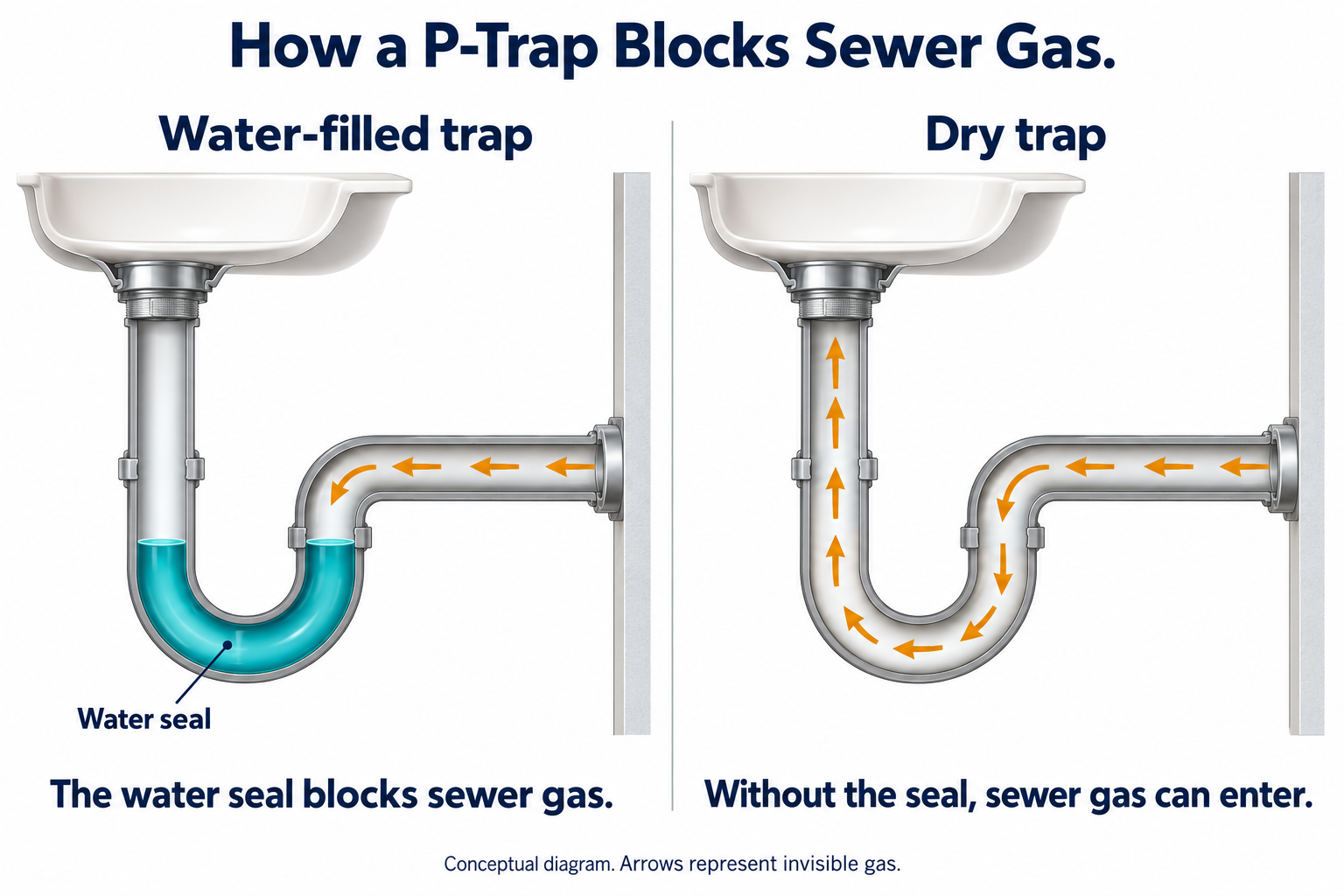
Every sink has a curved pipe underneath called a P-trap. It holds a little water that blocks sewer gas from coming back up. When that seal fails or the pipe gets dirty, you smell it at the sink. North Dakota State University Extension points to two main ways sewer gas gets in, dried-out traps and blocked roof vents, and buildup in the drain itself is the other common culprit:
| Cause | What’s happening | Tell-tale sign |
|---|---|---|
| Dry P-trap | The water in the trap evaporated, so sewer gas comes straight up | A guest bath or sink nobody uses |
| Soap, hair and food buildup | Organic gunk rots inside the pipe | Slow drain, smell worst right at the opening |
| Mold or mildew | Warm, damp drains grow it | Bathroom sinks, musty edge to the smell |
| Clog farther down the line | Blockage pushes gas back through the trap | Several drains slow or gurgling |
| Blocked plumbing vent | Debris, or frost and ice in winter, plugs the roof vent so gas can’t escape outside | Gurgling drains, smell in more than one room, often in cold weather |
How to fix a smelly drain
- Refill the trapIf the sink is rarely used, run the water for a minute. If the smell disappears, that was it. NDSU Extension suggests pouring about a quart of water into unused drains every 3 to 4 weeks, including basement floor drains, showers and tubs.
- Clean the drainSprinkle baking soda down the drain, then pour in white vinegar, about twice as much vinegar as soda. Let it fizz for several minutes, then flush with hot water.
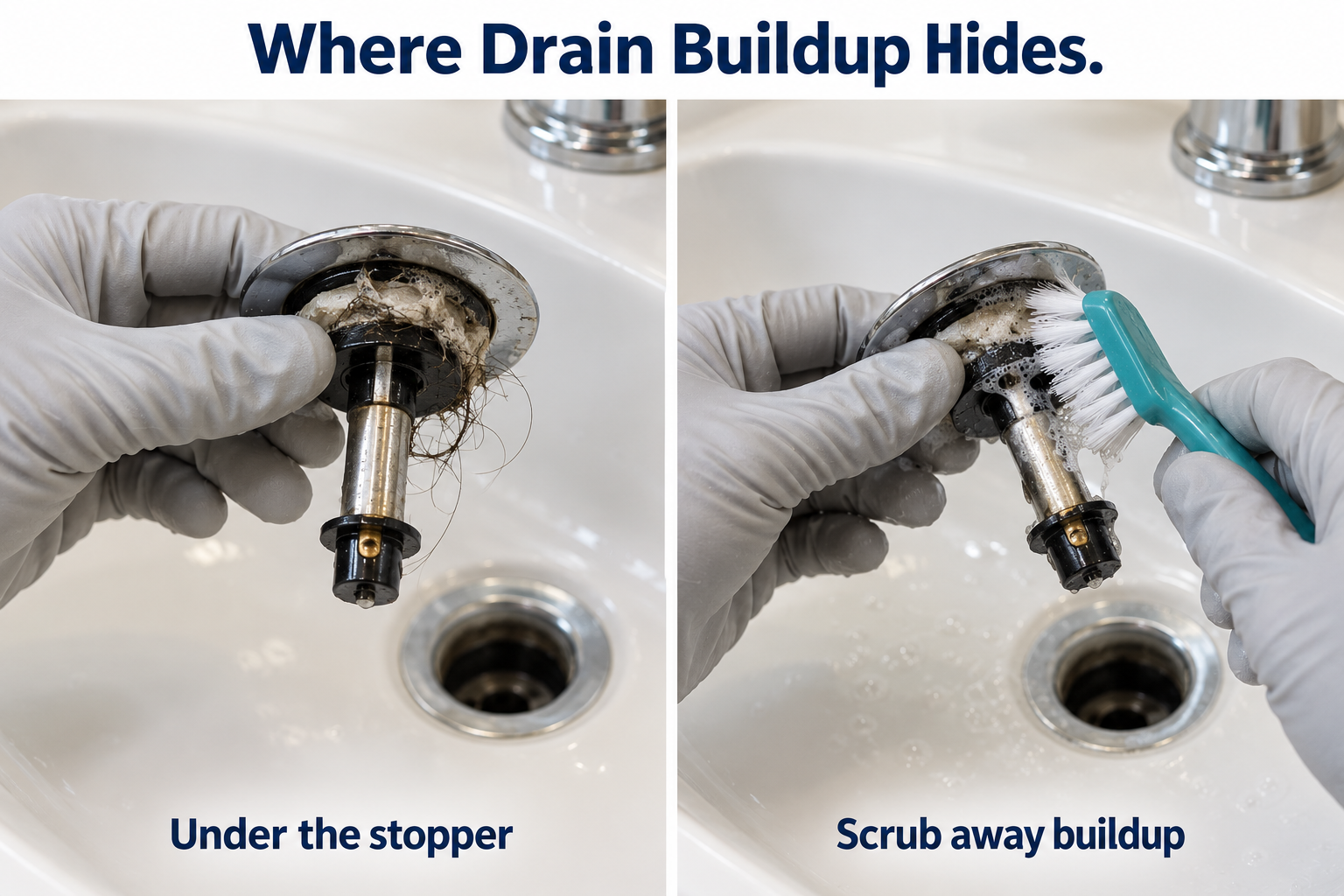
- Clean the stopper and openingPull the stopper and scrub off the hair and soap scum. A lot of the smell lives right there.
- Use hot tap water, not boilingBoiling water can be hard on plastic drain pipes. Very hot tap water does the job more gently.
- Call a plumber if it comes backRecurring smells, gurgling or several slow drains point to a deeper clog or a vent problem.
To keep drains from smelling, use a strainer to catch hair and food, clean the stopper now and then, and keep water in every trap.
If the water is the problem
When the glass itself smells, the culprit is hydrogen sulfide gas dissolved in your water. Penn State Extension explains where it comes from:
- Sulfur-reducing bacteria. They live in low-oxygen groundwater, wells and plumbing, and turn natural sulfate into the gas.
- The rock itself. It’s most common in wells drilled into shale and sandstone.
- Your water heater. The magnesium rod inside can turn sulfate into hydrogen sulfide on its own.
Penn State also notes that water softeners can create conditions where these bacteria grow, so a softener can make the smell worse, not better.
Only the hot water smells: fix the water heater
This is the most common case and the cheapest fix. Most water heaters have a magnesium rod (an “anode”) inside that protects the tank from rust. It can react with sulfate in your water and make the smell.
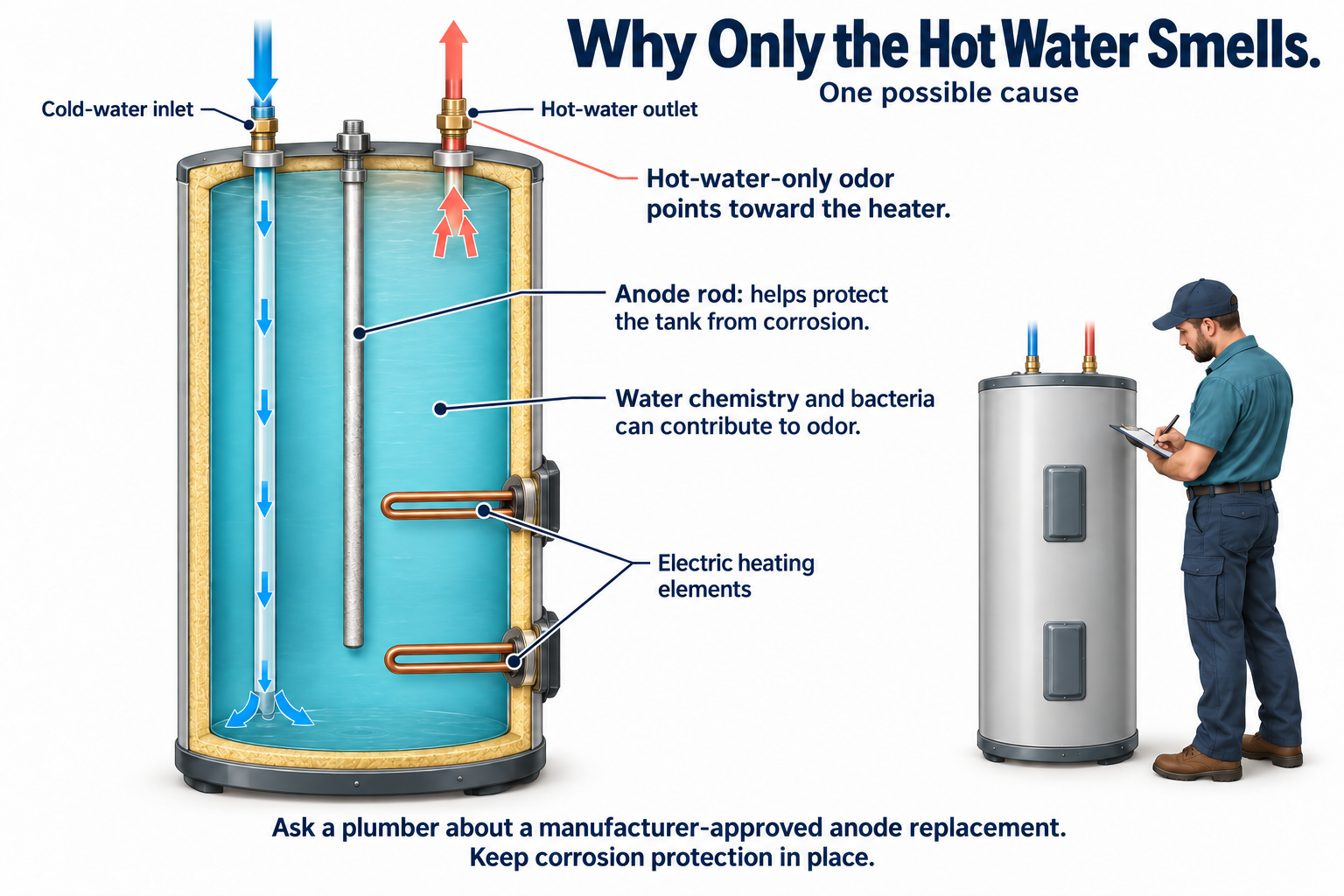
Penn State Extension recommends replacing it with an aluminum anode, which stops the smell while still protecting the tank. A plumber can swap it in one visit, and it’s a common DIY job for handy owners. Don’t just remove the rod without replacing it: the tank needs that protection.
The smell comes and goes: shock the well
If both hot and cold water smell, but it fades after the tap runs, bacteria are likely living in the well, the pressure tank or the pipes. The fix is shock chlorination: filling the well and plumbing with strong chlorine for several hours, then flushing it out.
You can do it yourself with plain household bleach, or hire a well contractor. Our coliform bacteria guide has the full step-by-step method and the Minnesota Department of Health’s bleach table by well size. If the smell returns within a few months, the source is likely the groundwater itself, and continuous treatment is the answer.
The smell never fades: treat it by level
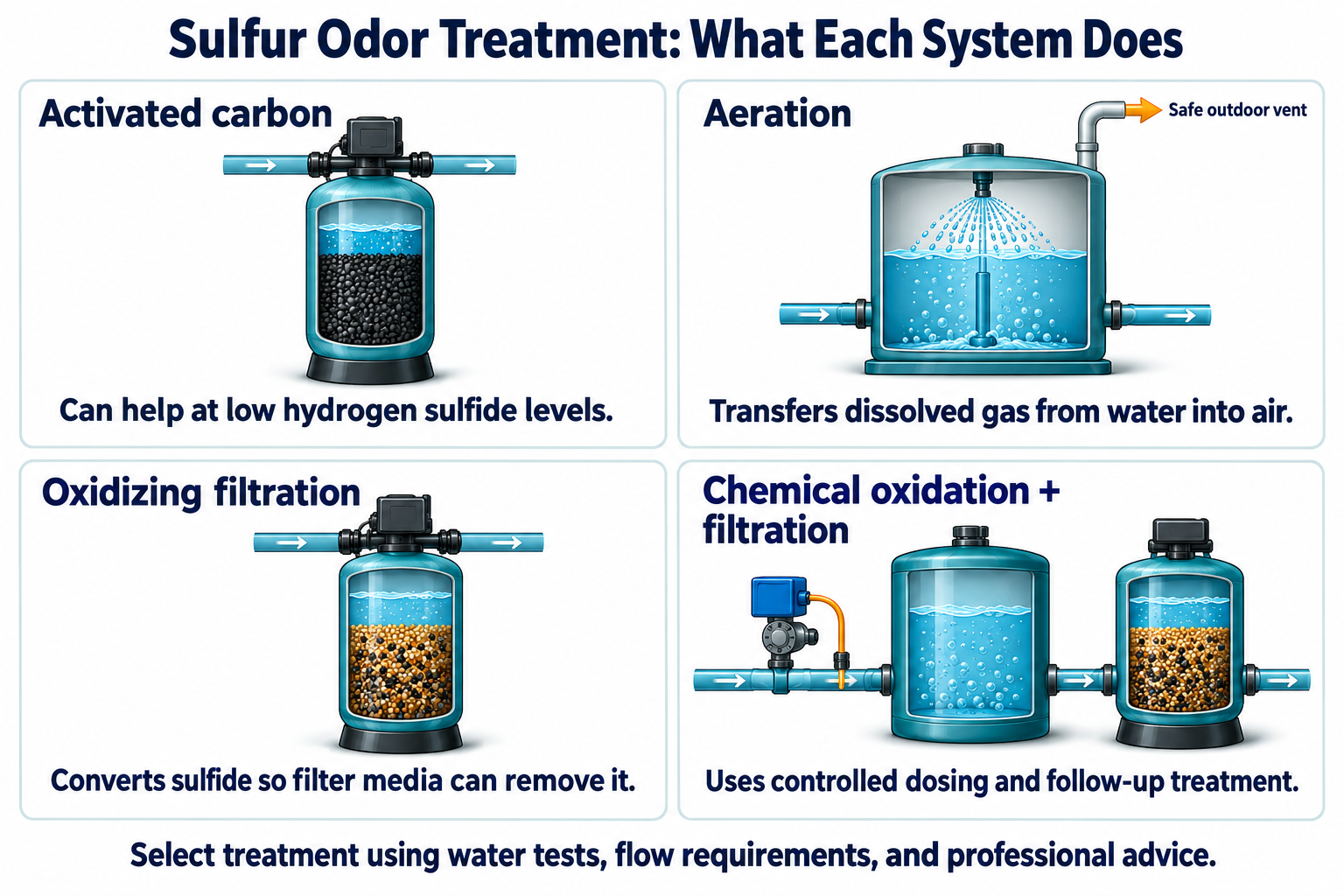
When the smell is constant, the gas is coming from the aquifer. The right treatment depends on how much hydrogen sulfide is in the water, so test first, then match:
| Treatment | Works up to about | Good to know |
|---|---|---|
| Activated carbon filter | 1 mg/L | Low maintenance, but the carbon needs replacing |
| Aeration | 2 mg/L | No chemicals added; higher upfront cost |
| Oxidizing filter | 2 to 3 mg/L | Regenerated with potassium permanganate |
| Chlorine or permanganate feed | Above 6 mg/L | Most upkeep; needs frequent refilling |
Source: Penn State Extension, December 2024.
HomeGuide puts most whole-house well water filtration systems at $800 to $4,000 installed. If you already have a lab report, our treatment planner picks the right equipment for your numbers and puts it in the right install order.
Is the rotten egg smell dangerous?
It depends on the source:
| Source | Risk | What to do |
|---|---|---|
| Hydrogen sulfide in well water | Low at household levels. Penn State notes the water becomes too unpleasant to drink long before it could harm you. | Test and treat for comfort and to protect plumbing |
| Sewer gas from a drain | Hydrogen sulfide in the air can cause eye, nose and throat irritation, headaches and nausea with ongoing exposure (CDC ATSDR) | Fix the trap or drain, air the room out |
| Natural gas leak | Dangerous: fire and explosion risk | Leave right away and call the gas company from outside |
Even when hydrogen sulfide in your water isn’t a health risk, it still costs you. It corrodes copper and brass, blackens silverware and fixtures, and shortens water heater life.
One more thing: the smell doesn’t tell you whether bacteria like coliform are present. A sudden new smell, especially after flooding or nearby digging or drilling, is a good reason to test your well.
How to get your water tested
Hydrogen sulfide escapes from a water sample quickly. Penn State says it has to be tested at your home or chemically preserved before the trip to the lab, so ask the lab for the right bottle before you sample. Add these tests at the same time:
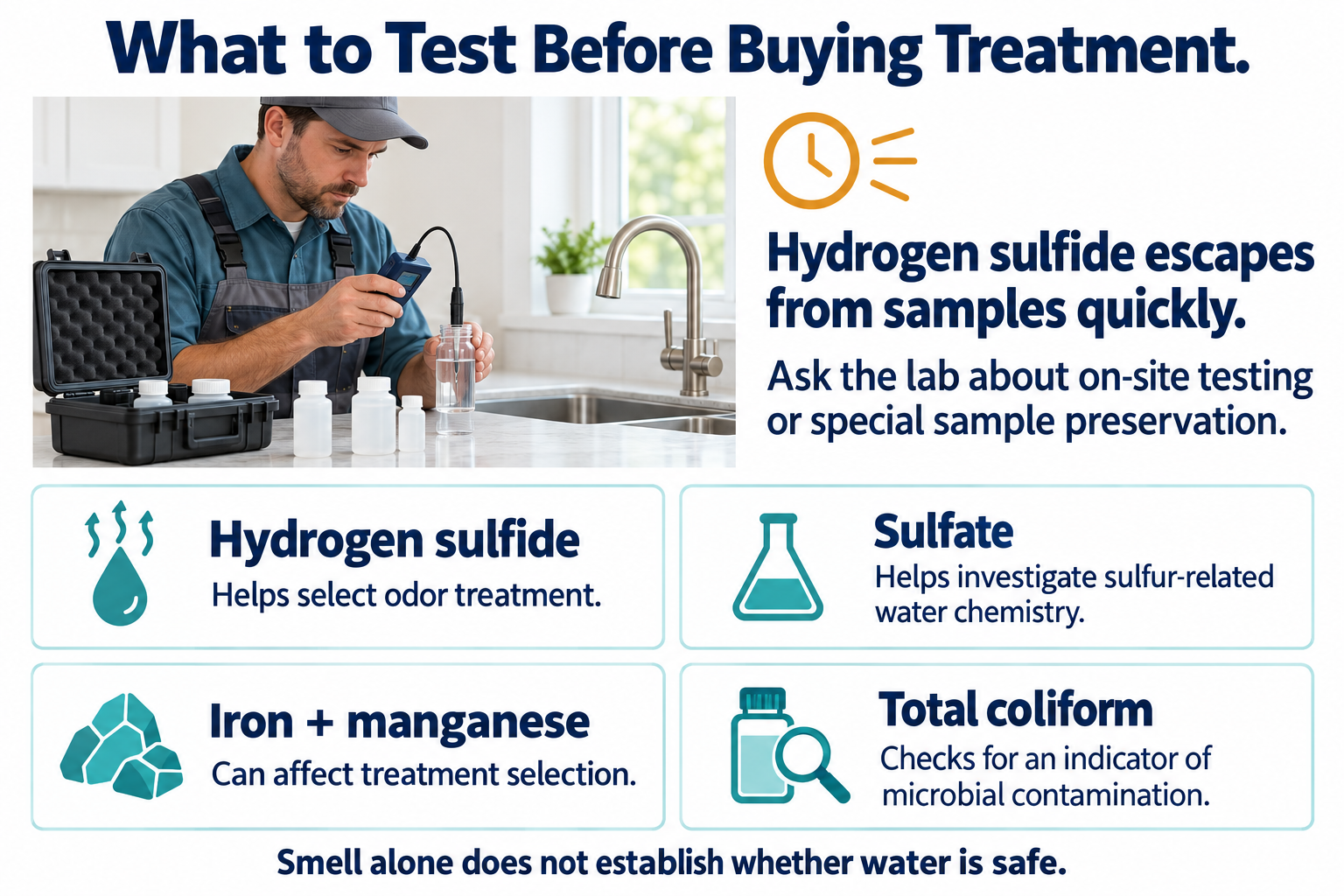
| Test | Why it helps |
|---|---|
| Hydrogen sulfide | Decides which treatment you need |
| Sulfate | The raw material the bacteria and anode turn into gas |
| Iron and manganese | Often found alongside sulfur, and change which filter works |
| Total coliform | The smell can’t tell you whether bacteria are present |
Find a state-certified lab near you in our lab finder.
Cheat sheet: where you smell it and what to do
| You notice | Most likely | First step | Typical cost |
|---|---|---|---|
| One sink, rarely used | Dry P-trap | Pour in a quart of water | Free |
| Kitchen or bathroom drain, glass smells fine | Buildup in the drain | Baking soda, vinegar and hot water | A few dollars |
| Several drains gurgle or smell | Clog or blocked vent | Call a plumber | A plumber visit |
| Hot water only | Water heater anode | Swap in an aluminum anode | One plumber visit or DIY |
| Hot and cold, fades with running | Bacteria in the well or pipes | Shock chlorinate | Household bleach, or a well contractor |
| Hot and cold, never fades | Hydrogen sulfide in the groundwater | Test, then treat by level | $800 to $4,000 installed (HomeGuide) |
| Whole house, near gas appliances | Possible gas leak | Leave on foot, call 911 from outside | Act right away |
Find licensed well and water treatment contractors near you, verified against state records.
Sink smells like rotten eggs: FAQ
Why does my sink smell like rotten eggs?
Either the water or the drain. Fill a glass, step away from the sink and smell it. If the glass smells, it’s hydrogen sulfide in the water. If the glass is fine, it’s sewer gas or buildup in the drain.
Why does my bathroom sink smell like rotten eggs but not the kitchen?
That points to the drain in that bathroom, not your water. A dry P-trap, soap and hair buildup, or mold in the drain are the usual causes. Run the water, then clean the drain with baking soda, vinegar and hot water.
Why does my kitchen sink smell like rotten eggs?
Food and grease rotting in the drain is common. Clean the drain and stopper, then flush with hot water. If the water in a glass also smells, the source is your water supply, not the drain.
Why does only my hot water smell like rotten eggs?
The magnesium anode rod in your water heater is reacting with sulfate in the water. Penn State Extension recommends replacing it with an aluminum anode, which usually ends the smell.
Is it safe to drink water that smells like rotten eggs?
Usually, at the levels found in home wells. Penn State notes the smell becomes unbearable well before hydrogen sulfide reaches harmful levels. Still test for bacteria, since the smell can’t tell you whether coliform is present.
Why does the smell show up after I’ve been away?
Water in drain traps dries out while nobody uses the sinks, letting sewer gas through. In the water heater, water sitting still gives the gas time to build up. Run every tap for a minute when you get back.
Why is the smell worse in the morning?
Water that sits overnight in the pipes and water heater gives hydrogen sulfide time to collect. Running the tap for a minute usually clears it if the source is in the plumbing.
Will a water softener get rid of the rotten egg smell?
No. A softener removes hardness, not gases, and Penn State notes softeners can create conditions that help the bacteria grow.
Will a carbon filter remove the smell?
Only at low levels. Penn State puts activated carbon at under about 1 mg/L. Above that it clogs quickly, and you need aeration or an oxidizing filter.
Could a rotten egg smell be a gas leak?
Yes. Gas utilities add mercaptan so leaks are easy to smell. If the smell is near gas appliances or fills a room, leave on foot, don’t use switches or phones inside, and call 911 from a safe place, as federal pipeline safety officials advise.
How often should I run water in an unused sink?
North Dakota State University Extension suggests pouring about a quart of water into unused drains every 3 to 4 weeks so the trap never dries out.
Checked October 2026. General guidance; follow your gas company, plumber or health department where it differs.