
Iron in Well Water: Orange Stains, Rusty Water and How to Remove It
Orange stains in the sink, rust rings in the toilet and yellow laundry all point to iron. Here is how to tell which kind of iron you have, whether it is safe, which tests to order, and how to remove it with the right filter.
Likely causes
- Dissolved iron from the rock and soil
- Rusting steel casing
- pipes or pressure tank
- Iron bacteria in the well
- Manganese alongside iron
Tests to order
- Iron
- Manganese
- pH
- Hardness
- Total coliform bacteria
Treatment options
- Water softener for low dissolved iron
- Oxidizing iron filter such as greensand
- Air or chlorine injection plus filtration
- Shock chlorination for iron bacteria
Short answer: orange or rust-colored stains in your sink, toilet and laundry mean iron in your well water. Iron comes from the rock and soil around the well, or from old steel casing and pipes. It is not a health risk, but it stains, clogs fixtures and gives water a metallic taste. To fix it, first find out which kind of iron you have and how much. Then match the treatment to your lab results: a softener for low levels, an iron filter for moderate levels, and oxidation plus filtration for high levels or iron bacteria.
Signs of iron in your well water
The EPA lists four tell-tale signs of too much iron: a rusty color, sediment, a metallic taste and reddish or orange stains. NDSU Extension says stains can start once dissolved iron goes above about 0.2 mg/L. Here is what that looks like around the house:
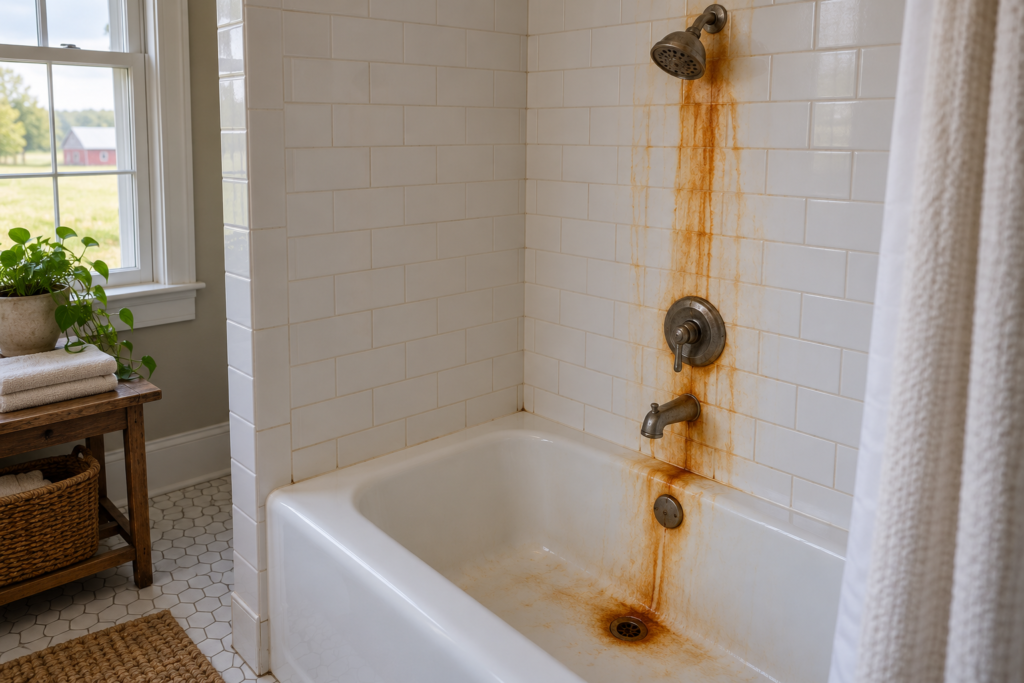
- Orange or reddish-brown rings in the toilet, tub and sink
- White laundry that comes out yellow or rust-spotted
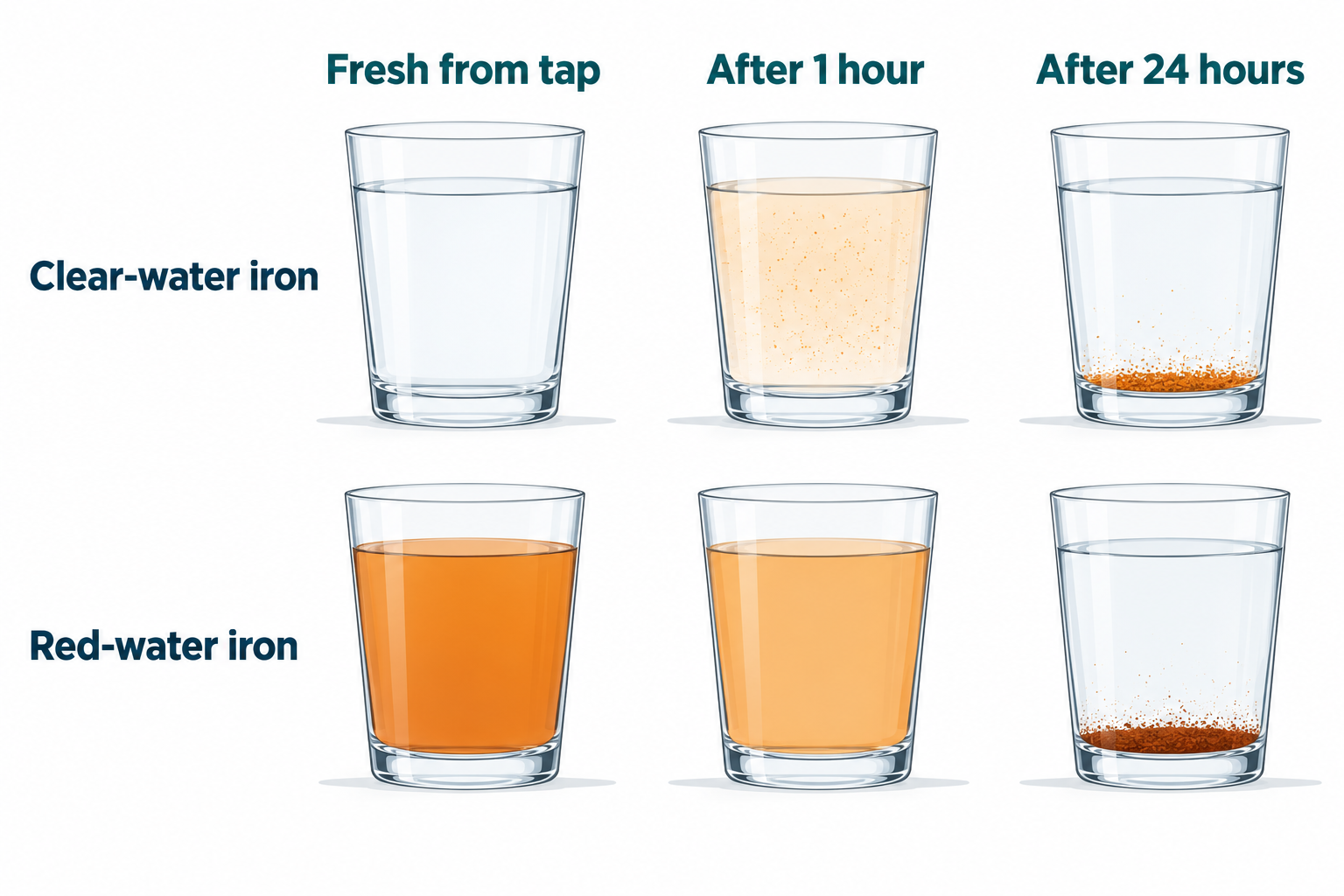
- Water that turns cloudy orange after it sits in a glass
- A metallic taste, and a rainbow sheen on coffee or tea
- Orange stains on siding, fences and sidewalks from the sprinklers
- Clogged faucet screens, dishwashers and sprinkler heads
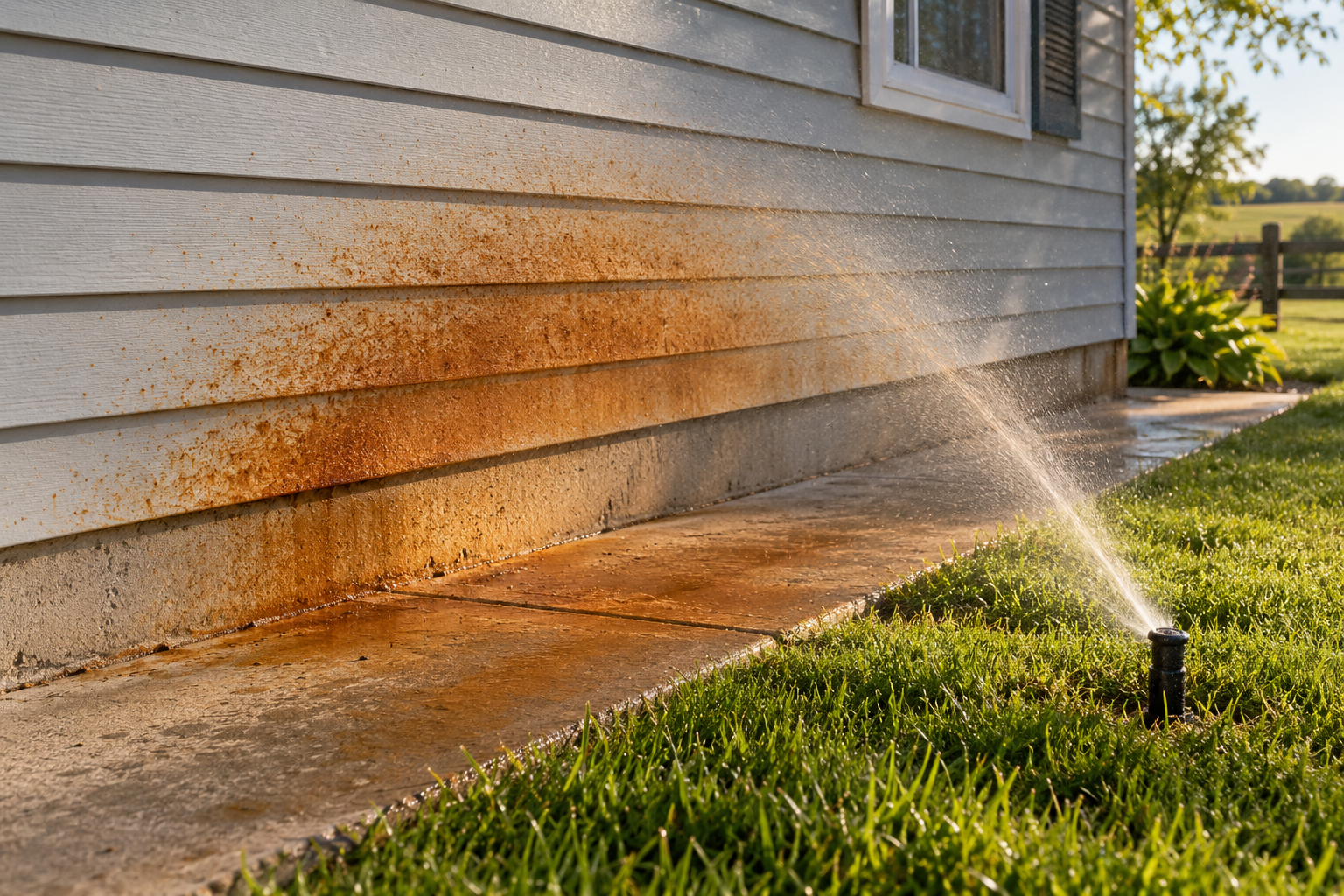
Black or dark brown stains point to manganese instead, which often travels with iron. See our manganese guide if you see both colors.
The glass test: which kind of iron do you have?
Iron shows up in three main forms, and each one needs a different fix. Buying a filter before you know which one you have is an easy way to waste money. Fill a clear glass from the cold tap, set it on the counter and check it over the next day.
| What you see | Type of iron | Where it comes from |
|---|---|---|
| Clear at first, then orange or rusty particles form as it sits | Dissolved (ferrous) iron, also called clear-water iron | The rock and soil around the well |
| Orange or red right out of the tap, and it settles out | Particle (ferric) iron, also called red-water iron | Rusting steel casing, galvanized pipes, an old pressure tank, or iron that has already met air |
| Brown, slimy film in the toilet tank or a rainbow sheen on standing water | Iron bacteria | Bacteria that feed on iron, often brought in during drilling or repairs |
NDSU Extension describes all three. The Minnesota Department of Health adds that iron can come from the ground as rain and snowmelt soak through iron-rich soil and rock, or from corroding steel casing and pipes.
Is iron in well water safe to drink?
Yes, in most cases. The Minnesota Department of Health says iron in water does not usually cause health problems, and your body needs iron to carry oxygen in the blood. The EPA’s 0.3 mg/L standard is about looks and taste, not health, and it is not enforced on private wells.
There is one caution. The Minnesota Department of Health notes that some harmful germs need iron to grow, so iron can make a bacteria problem worse. If your well has iron bacteria or the water changes after heavy rain, test for coliform bacteria too. Our coliform bacteria guide explains what a positive result means.
What to test for
Ask a state-certified lab to run these on one sample. Each number changes which treatment will work.
| Test | Why it matters |
|---|---|
| Iron | Sets the size and type of the treatment system |
| Manganese | Often found with iron, and it is a health concern at higher levels |
| pH | Some iron filter media only work above a certain pH |
| Hardness | Decides whether a water softener can handle the iron |
| Total coliform bacteria | Worth adding if you see slime or the water changes after rain |
You can find a certified lab near you in our lab finder.
How to remove iron from well water
The right iron filter for well water depends on how much iron you have and what form it is in. This table pulls together guidance from the Minnesota Department of Health, NDSU, Penn State and Virginia Tech Extension.
| Treatment | Iron level | Good to know |
|---|---|---|
| Phosphate feeder | Up to 2 mg/L | Keeps iron dissolved so it doesn’t stain. It doesn’t remove the iron. |
| Water softener | Up to 2 to 5 mg/L of dissolved iron | Only works on clear-water iron. Penn State says the pH should be above 6.7. |
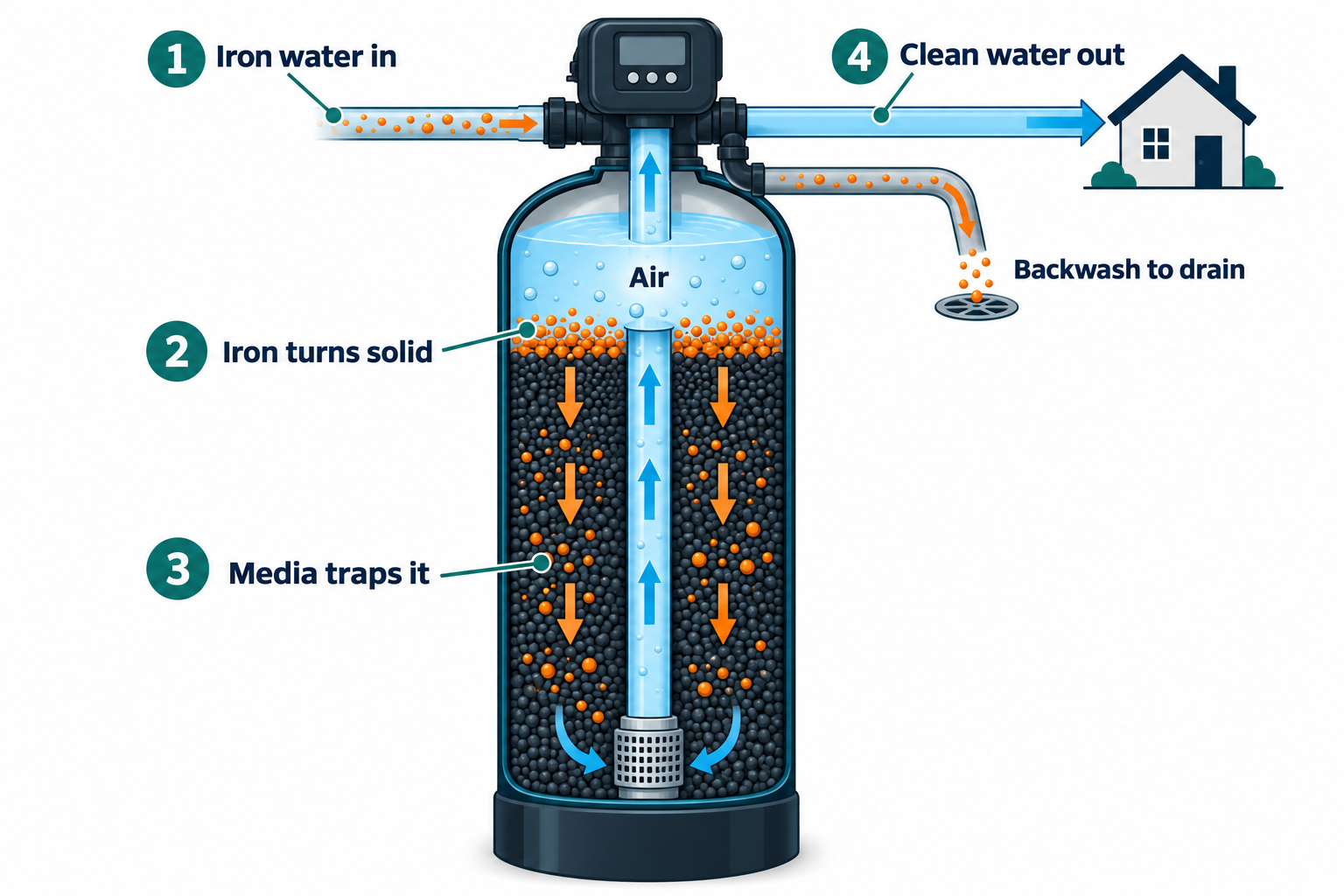
| Oxidizing iron filter (greensand or similar) | Up to about 10 to 15 mg/L | Turns dissolved iron into particles and traps them. Needs regular backwashing or regeneration. |
| Air or chlorine injection plus filtration | Above 10 mg/L, or with iron bacteria | Chlorine also kills iron bacteria. Usually installed by a water treatment pro. |
| Replace the rusting part | Particle iron from the system | If the iron comes from old steel pipes, casing or a tank, no filter fixes the source. |
The Minnesota Department of Health warns that a softener works poorly when hardness is low and iron is high, or when the water is exposed to air, like in an old galvanized pressure tank. Our treatment planner can match equipment to your lab results.
Getting rid of iron bacteria
Iron bacteria are not known to cause disease, but they clog wells and pipes and can cause musty or swampy smells. Treatment usually starts with a shock chlorination of the well and plumbing. The Minnesota Department of Health recommends keeping the chlorine close to, but not over, 200 ppm. Penn State warns that the slime protects the bacteria, so they often come back, and says not to shock a well more than once every six months. If they keep coming back, ask a contractor about a chlorine feeder. Read more in our musty smell guide.

Find licensed water treatment contractors near you, verified against state records.
Iron in well water: FAQ
What causes orange stains in the toilet from well water?
Orange or rust-colored stains are iron. Dissolved iron in the water reacts with air in the bowl and tank and leaves orange deposits. A lab test for iron, manganese, pH and hardness tells you which treatment will stop it.
Why does my well water turn orange after it sits?
That is dissolved, or clear-water, iron. It stays invisible until it meets air, then forms orange particles. A water softener can handle low levels, and an oxidizing iron filter handles higher ones.
Will a water softener remove iron?
Only dissolved iron, and usually only up to 2 to 5 mg/L. It won’t remove iron that is already orange, and it works poorly with low hardness or iron bacteria.
What is the best iron filter for well water?
It depends on your test results. For most homes with 3 to 10 mg/L of iron, an oxidizing filter such as greensand is a common choice. Above 10 mg/L, or with iron bacteria, add air or chlorine injection before the filter.
Is iron bacteria in well water dangerous?
Iron bacteria are not known to cause disease, but they can make it easier for other germs to grow. Test for coliform bacteria, and start treatment with a shock chlorination.
Sources: U.S. EPA, Minnesota Department of Health, NDSU Extension, Penn State Extension and Virginia Tech Extension. Checked October 2026. General guidance; follow your health department and lab where they differ.