
Black Stains and Black Specks From Well Water
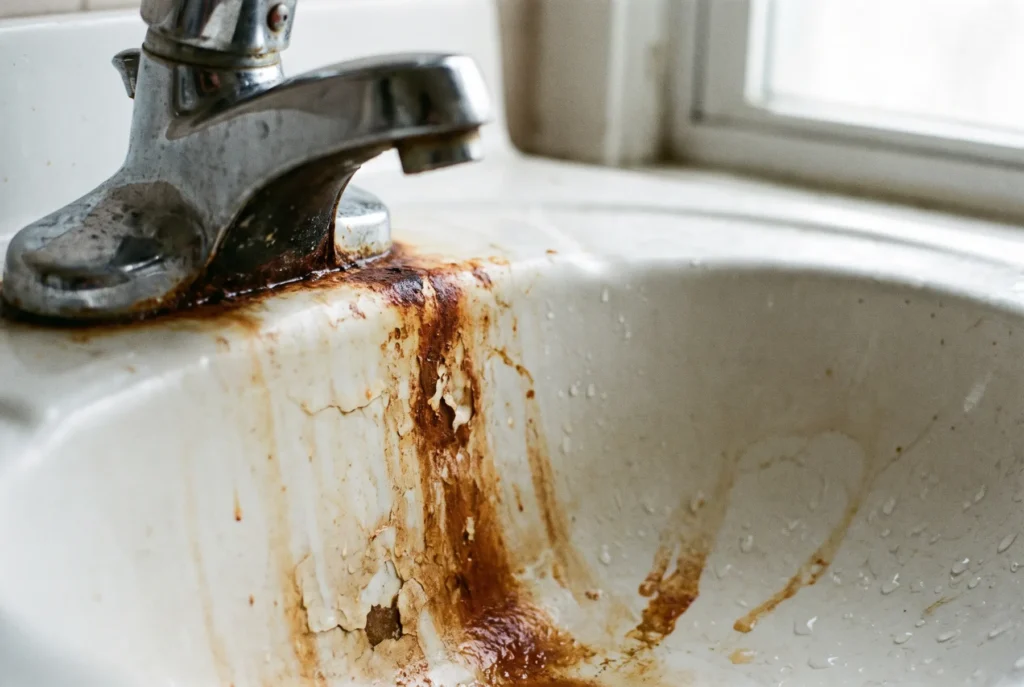
Black or dark brown stains in the toilet, black flakes in the dishwasher and a dark film on the shower door are manganese. It travels with iron, stains harder, and matters for infants.
Likely causes
- Dissolved manganese from the aquifer
- Manganese bacteria
- Manganese oxide flaking off inside pipes
Tests to order
- Manganese
- Iron
- pH
- Hardness
Treatment options
- Oxidizing filter with greensand or catalytic media
- Water softener for low levels with the right pH
- Shock chlorination for manganese bacteria
Iron’s darker cousin
Manganese stains at one tenth the concentration of iron. The secondary limit is 0.05 mg/L, and staining starts right there: black rings at the water line, a greasy black film that smears when rubbed, dark specks in the ice maker. Water often looks clear from the tap because the manganese only oxidizes and drops out later, inside your appliances.
Why it is more than a nuisance
The EPA health advisory for manganese is 0.3 mg/L, and for infants under six months the advice is stricter, because developing brains absorb it more easily. If your well has a manganese problem and a baby drinks formula made from the water, test now and use bottled water until the result is back.
Getting it out
Manganese is stubborn. A softener removes it only when the pH is above about 6.8 and the level is low. Otherwise it needs an oxidizing filter, and the media choice matters: manganese greensand or a catalytic media with air or chlorine injection, $1,200 to $3,000 installed. Raising pH first with a neutralizer often makes the difference between a filter that works and one that does not. Black slime in the toilet tank means manganese bacteria, which start with a shock chlorination.
Why do my dishes have black flakes?
The dishwasher’s heat oxidizes dissolved manganese into solid manganese oxide, which flakes off the interior onto the dishes.
Does manganese affect taste?
Above about 0.1 mg/L it adds a bitter, metallic taste, especially in coffee and tea.