
Blue-Green Stains From Well Water: Copper, Acidic Water and How to Fix It
Blue or green stains where water drips are copper from your own pipes, dissolved by acidic well water. Here is what it means, whether the water is safe, how to test for copper and lead, and how an acid neutralizer fixes it.
Likely causes
- Acidic (low pH) water dissolving copper pipes
- New copper plumbing
- Lead from old solder and brass fixtures
Tests to order
- pH
- Copper
- Lead
- Hardness
Treatment options
- Calcite acid neutralizing filter
- Soda ash feed pump for very low pH
- Reverse osmosis for drinking water
- Replace leaded fixtures
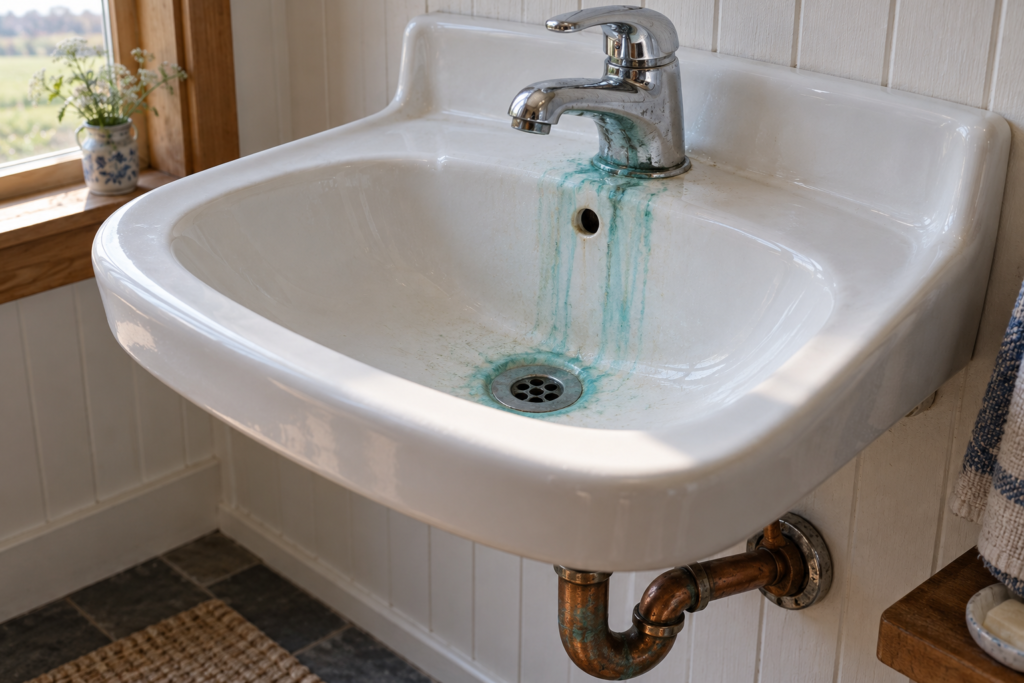
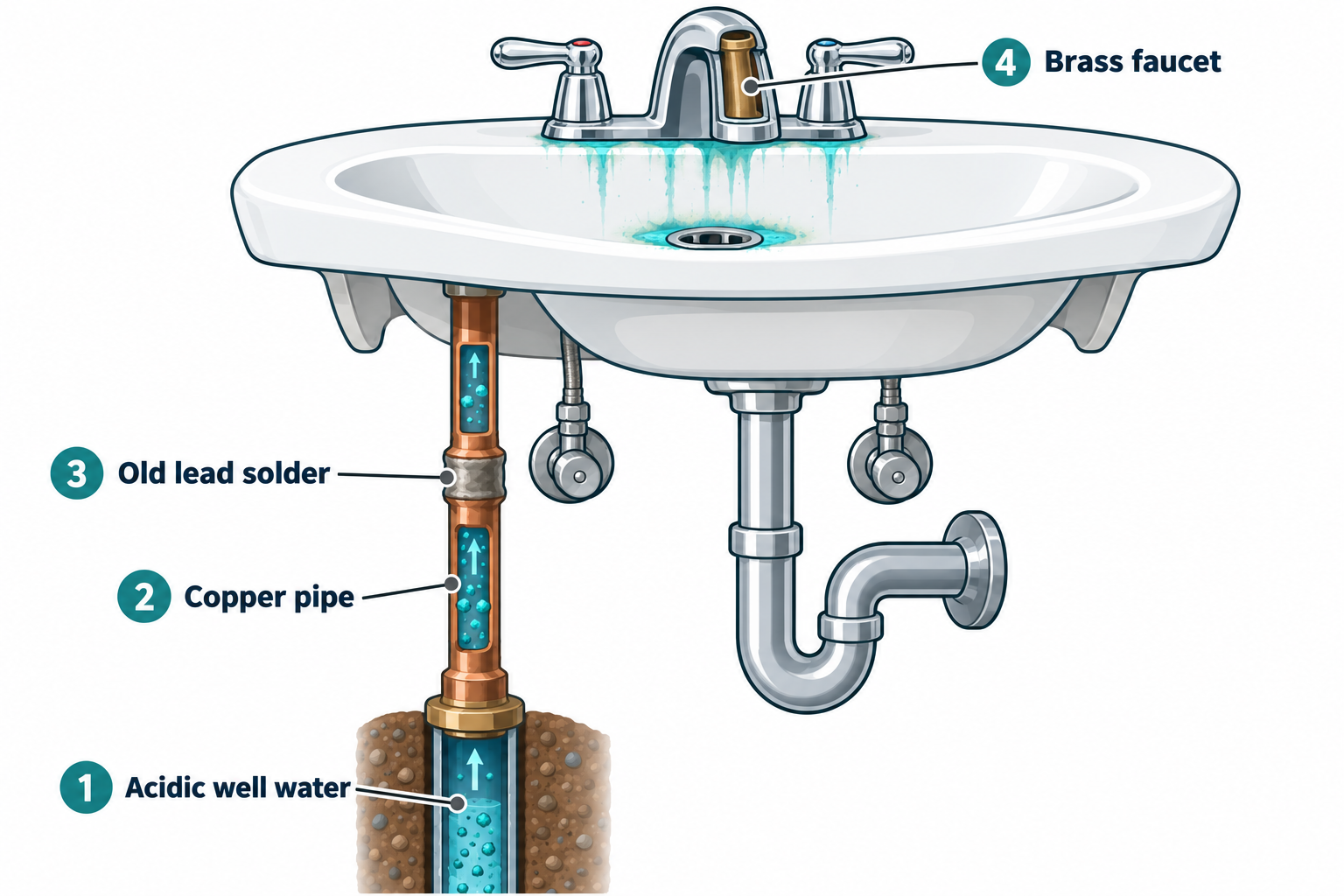
Short answer: blue-green stains in the sink, tub or toilet are copper, and the copper is coming from your own pipes, not the well. It happens when the well water is acidic, or corrosive, and slowly dissolves the copper plumbing. The stains themselves are only a cleaning problem. The real concern is that the same water can also pull lead out of older solder and brass fixtures. Test for pH, copper and lead, then raise the pH with an acid neutralizer so the water stops eating your pipes.
What blue-green stains mean
The EPA lists blue-green staining and a metallic taste as the two signs of too much copper in water. Copper does not usually come from the ground. The Minnesota Department of Health explains that it gets into water as the water passes through household plumbing. So when you see these stains, your water is telling you something about your pipes.
The stains form wherever water drips or dries and leaves the copper behind. Here is where most people notice them:
- Under the faucet and around the drain in sinks and tubs
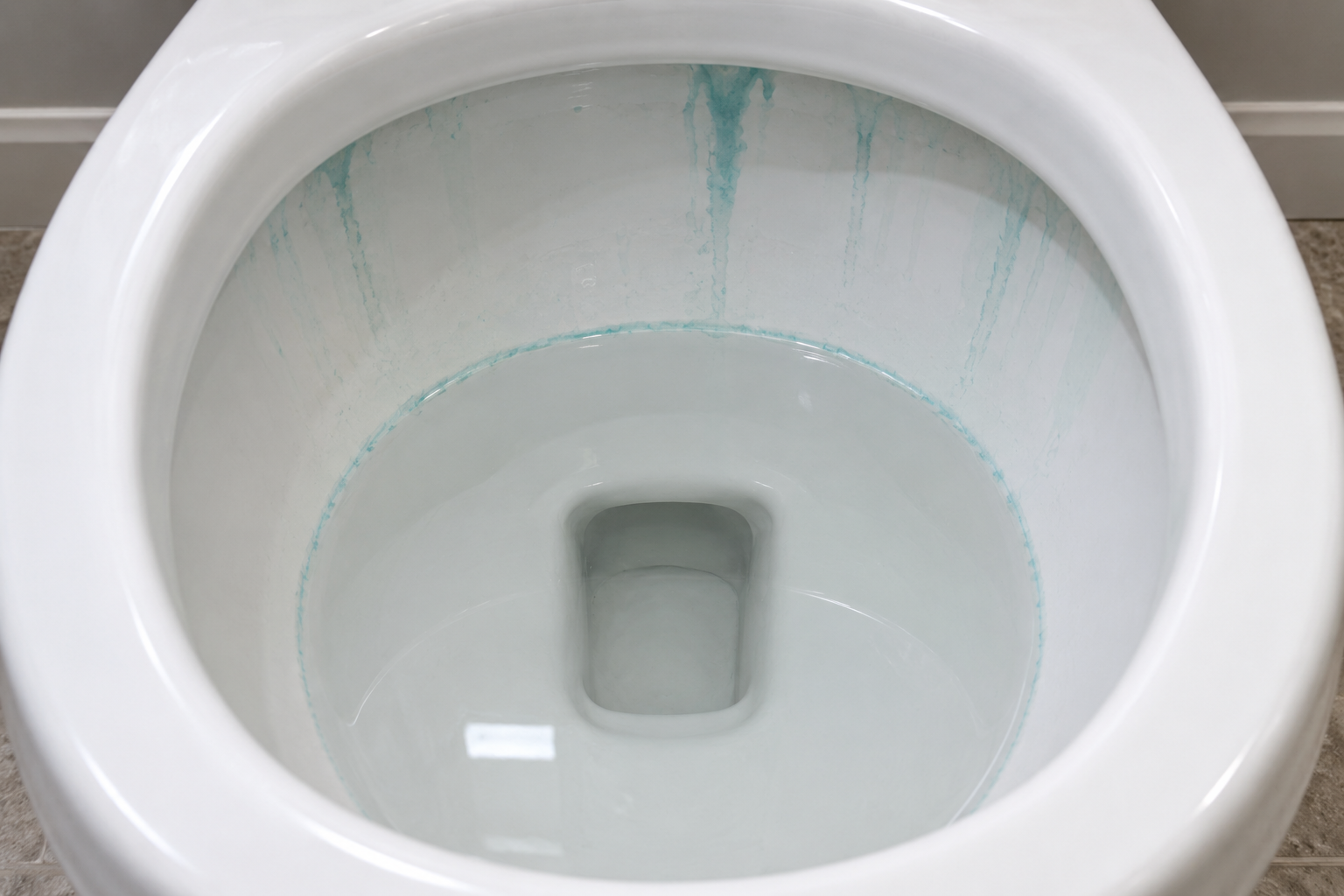
- A blue ring or streaks in the toilet bowl
- On shower walls and glass doors
- On light-colored laundry
Penn State Extension lists a few other signs that often show up with them. These include a metallic taste, especially in the first water of the morning, and small leaks in the plumbing. In homes with galvanized steel pipes, Connecticut health officials note that acidic water can leave reddish stains instead.
Why it happens: acidic, corrosive water
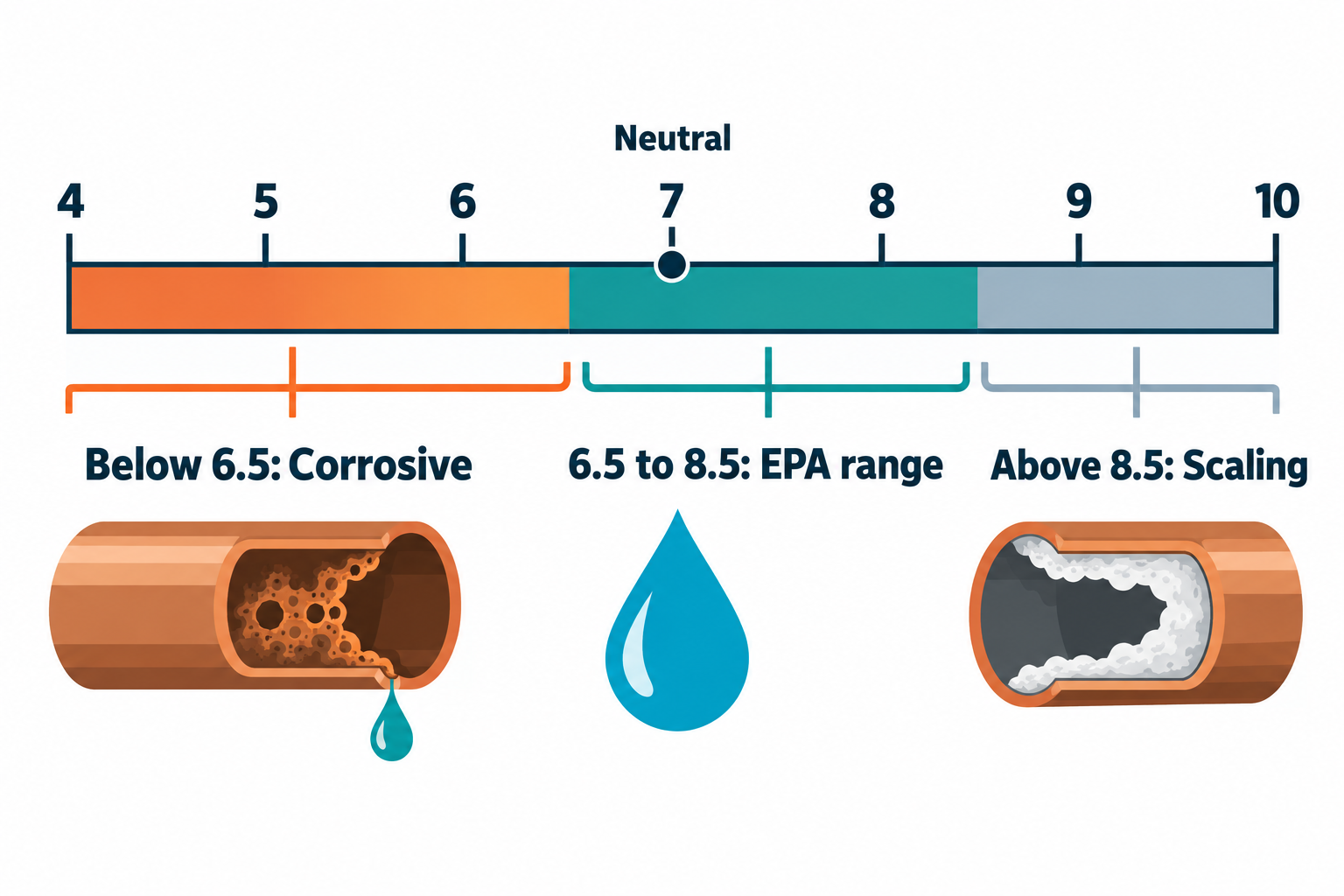
pH is a measure of how acidic water is. Seven is neutral, and lower numbers are more acidic. The EPA recommends drinking water between 6.5 and 8.5. Below 6.5, water is more likely to corrode metal plumbing. Virginia Tech Extension calls pH “the primary determining factor” of how corrosive water is.
Well water picks up its pH from the ground around it. Water from granite, sandstone and other rock that is low in minerals is often acidic. Corrosive well water is very common in some areas. Penn State says about 60% of private wells, springs and cisterns in Pennsylvania have corrosive water. In Virginia, Virginia Tech says it is most common in the Blue Ridge and parts of the Piedmont.
Pipe age matters too. The Minnesota Department of Health notes that copper plumbing less than about three years old is more likely to release copper, because the pipes have not built up a protective coating yet.
Is blue-green water safe to drink?
It depends on how much copper and lead are in it, which is why testing comes first.
Copper. Your body needs a little copper, but too much can upset your stomach. The Minnesota Department of Health lists headaches, vomiting, diarrhea, stomach cramps and nausea. Over many years, it can also harm the liver and kidneys. Babies under one year old and people with Wilson’s disease are more sensitive to copper.
Lead. This is the bigger worry. Water that dissolves copper can dissolve lead too. Before 1986, solder used to join copper pipes could contain lead. Penn State adds that chrome-plated brass faucets can leach lead even in homes with plastic water lines. In Penn State’s lab data from 2007 to 2024, about 10% of private water samples were over the EPA’s lead action level. Lead is especially harmful to children and during pregnancy. Read more in our lead in well water guide.
What to test for
Ask a state-certified lab to test for:
| Test | Why it matters |
|---|---|
| pH | Shows if the water is acidic enough to corrode pipes, and decides which neutralizer you need |
| Copper | Checks for health risk at the tap |
| Lead | The most important health test when water is corrosive |
| Hardness | Helps the installer pick the right treatment, since neutralizers add hardness |
How you collect the sample matters. Penn State recommends a first-draw sample, taken first thing in the morning from cold water that sat in the pipes overnight, because copper and lead are usually highest then. Taking a second sample after running the tap for a few minutes helps show how much is coming from the plumbing rather than the well. You can find a certified lab in our lab finder.
How to fix acidic well water
The fix is to raise the pH, so the water stops dissolving your pipes. Once that happens, new stains stop forming. The right acid neutralizer for well water depends on how low your pH is.
| Treatment | Best for | Good to know |
|---|---|---|
| Calcite neutralizing filter | pH down to about 5.3 | A tank of crushed limestone or marble that slowly dissolves and raises the pH as water passes through. Virginia Tech lists calcite alone, or blended with magnesium oxide, for water down to pH 5.3. |
| Soda ash feed pump | pH below 5.3 | Injects a mild alkaline solution. Penn State notes it does not add hardness to the water. |
| Reverse osmosis at the kitchen tap | Drinking and cooking water | Removes copper and lead at one tap. It does not protect the rest of the plumbing. |
| Replace plumbing | Old lead solder or leaded brass fixtures | Swapping fixtures or pipes removes the source of lead for good |
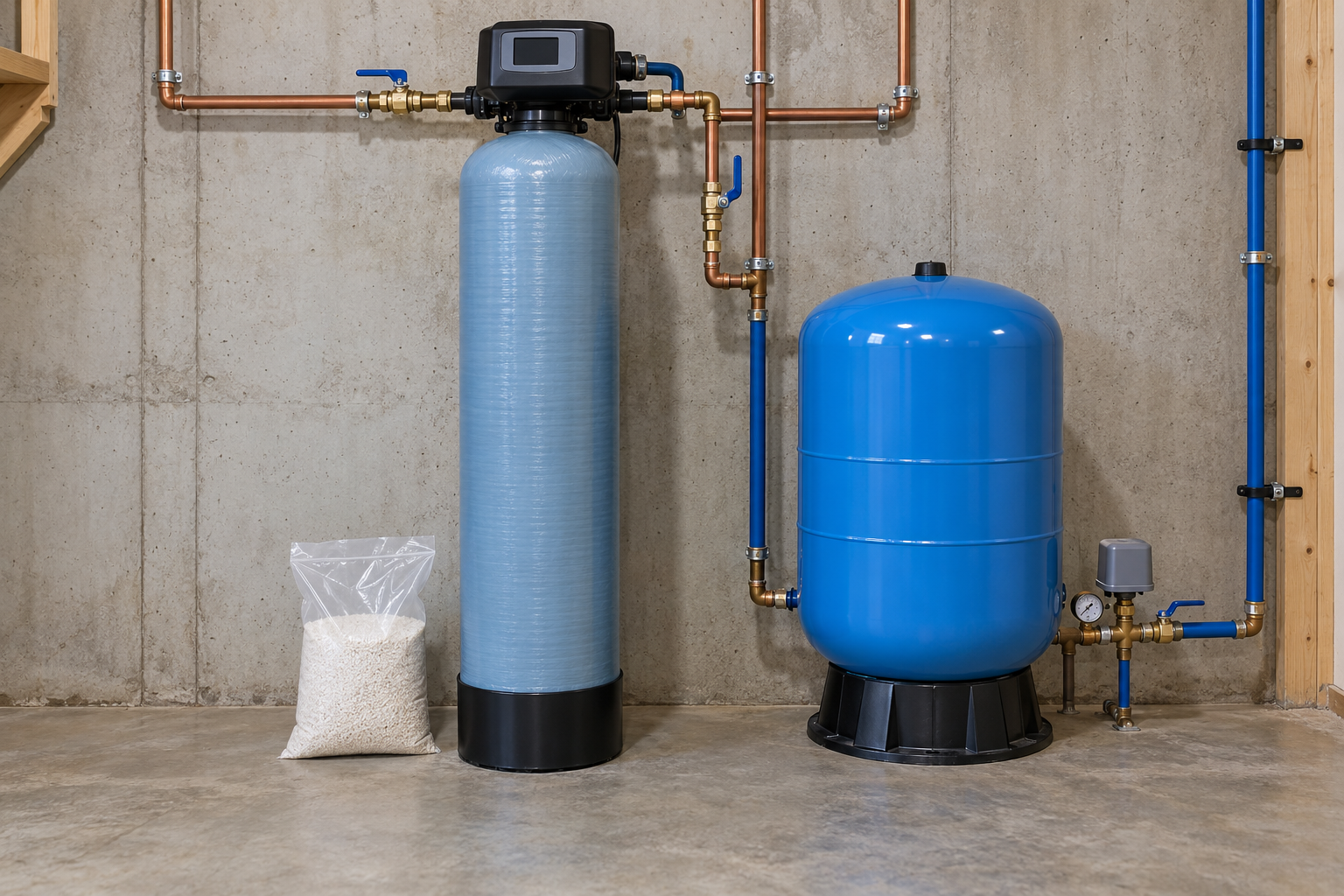
Neutralizing filters need some care. Connecticut health officials note they must be backwashed from time to time and refilled as the media dissolves. They also add hardness, so some homes add a water softener after the neutralizer. Our treatment planner can help you size a system from your lab results.
Once the system is running, retest pH, copper and lead, using a first-draw sample again. That is the only way to know the treatment is doing its job. If the pH has come up into the 6.5 to 8.5 range and copper and lead have dropped, your pipes are protected. If not, the media may need refilling or the system may need adjusting.
Cleaning the stains you already have
Once the water is treated, the stains you clean off should not come back. For existing stains, a mild acid like white vinegar or lemon juice often loosens copper stains on porcelain. Rinse well, and avoid harsh abrasives that scratch the finish.
Find licensed water treatment contractors near you, verified against state records.
Blue-green stains: FAQ
Why is my toilet stained blue?
Blue or blue-green stains in the toilet are copper. Acidic well water dissolves copper from your pipes, and the copper is left behind where water sits in the bowl. Test the water’s pH, copper and lead to confirm it.
Are blue-green stains dangerous?
The stains themselves are not, but they mean your water is corroding your plumbing. High copper can cause stomach problems, and the same water can carry lead from older solder and brass fixtures. Test for lead, especially if children live in the home.
What is the best acid neutralizer for well water?
It depends on your pH. For pH down to about 5.3, a calcite filter, alone or blended with magnesium oxide, is the usual choice. Below 5.3, a soda ash feed pump works better and does not add hardness.
How do I raise the pH of my well water?
Install an acid neutralizer at the point where water enters the house. A calcite filter works for pH down to about 5.3, and a soda ash feed pump is used for more acidic water. Test first so the system matches your water, then retest after it is installed.
Will a water softener stop blue-green stains?
No. A softener removes hardness but does not raise pH, so the water keeps eating the pipes. Some homes need a softener after a calcite neutralizer because the neutralizer adds hardness.
Do I need to replace my copper pipes?
Usually not. Raising the pH protects the pipes you have. Replacing plumbing makes sense if you find pinhole leaks, lead solder or leaded brass fixtures.
Sources: U.S. EPA, Minnesota Department of Health, Penn State Extension (corrosive water), Penn State Extension (lead), Virginia Tech Extension and the Connecticut Department of Public Health. Checked October 2026. General guidance; follow your health department and lab where they differ.