
Cloudy Well Water: Air, Sand or Surface Water? How to Tell and Fix It
Cloudy well water is usually air, sand from the well, or surface water getting in. A clear glass tells you which in a couple of minutes. Here is what each one means, when the water is unsafe, which sediment filter to use and how to fix the well.
Likely causes
- Air bubbles in the water
- Sand or silt from the well screen
- Pumping more than the well can supply
- Surface water after heavy rain
- Very fine clay
- Methane gas (rare)
Tests to order
- Glass test at home
- Total coliform and E. coli
- Turbidity
- Total dissolved solids
Treatment options
- Whole-house sediment filter after the pressure tank
- Pump and well screen inspection
- Repair the casing or cap
- Shock chlorination after a leak is fixed
Short answer: cloudy well water is usually one of three things: harmless air bubbles, sand or silt from the well, or surface water leaking in. A clear glass on the counter tells you which one in a couple of minutes. Air is safe to drink. Sand is wearing out your pump and needs a fix. Cloudiness that shows up after heavy rain can carry bacteria, so switch to bottled water and test before you drink it again.
The glass test: find out what’s in your water
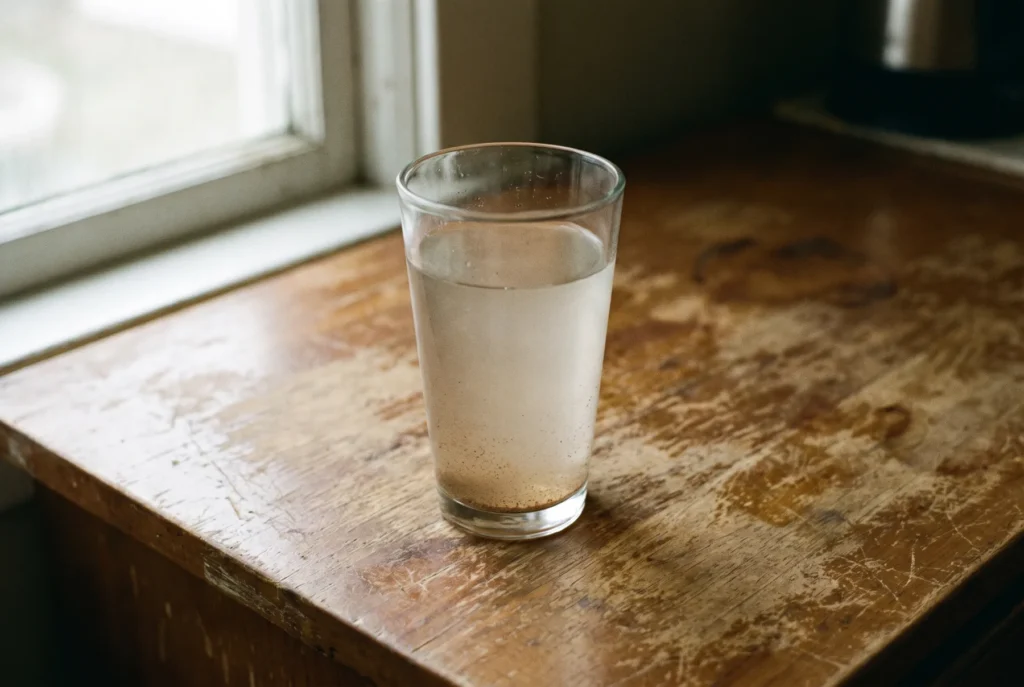
Fill a clear glass from the cold tap, set it on the counter and watch it for a few minutes. What you see points you to the cause.
| What you see | Most likely cause | How urgent |
|---|---|---|
| Milky water that clears from the bottom up | Tiny air bubbles | Low. Safe to drink. |
| Grit or sand that settles to the bottom | Sand or silt from the well | Medium. Your pump is wearing. |
| An even haze that doesn’t settle | Very fine clay or silt | Test it to find the source. |
| Cloudy only after heavy rain or snowmelt | Surface water reaching the well | High. Test for bacteria now. |
| Milky or frothy, with spitting taps or a gurgling well | Possibly methane gas | High. Have it checked. |
If the water is also discolored or smells bad, more than one thing may be going on. Treat it as unsafe to drink until a lab test says otherwise.
If it’s air bubbles
This is the most harmless cause. The USGS explains that water in your pipes is under pressure, which keeps air dissolved in it. When the water pours into a glass, the pressure drops and the air comes out as tiny bubbles. They rise to the top and the glass clears from the bottom up, usually within a minute or two.
Air on its own is harmless. If it happens all the time, though, or your taps sputter and spit, the pump may be drawing the well down or a fitting may be sucking in air. Our guide to air in well water walks through those checks.
When it might be methane instead
In some areas, gas that looks like air is actually methane. The Minnesota Department of Health says methane can make water look milky, frothy or bubbly, and can cause sputtering faucets or a gurgling sound from the well. It is not known to be harmful to drink, but it can build up in a well pit or basement and can explode at 5% to 14% in air, so it should be vented outdoors. It is rare, likely under 1% of Minnesota wells. If you suspect it, ask a lab that tests for methane and call a licensed well contractor.
If it’s sand or grit
Sand is the one that costs real money if you ignore it. Penn State Extension calls wear from pumping sand “the leading cause of pump failure.” The grit grinds down pump parts, wears the well screen openings larger, and settles in the pressure tank, valves and water heater.
Why a well starts producing sand
Penn State Extension lists these common causes:
- Poor well design, like a screen in the wrong place or with slots that are too big
- A well that wasn’t fully cleaned out, or “developed,” after drilling
- Loose sand around the well that is no longer held together
- A screen or casing that has corroded through
- Pumping more water than the well was built to deliver
A licensed pump contractor can pull the pump, check how deep it is set and look at the screen and casing, often with a downhole camera. Depending on what they find, the fix might be resetting the pump, slowing the flow rate or repairing the screen.
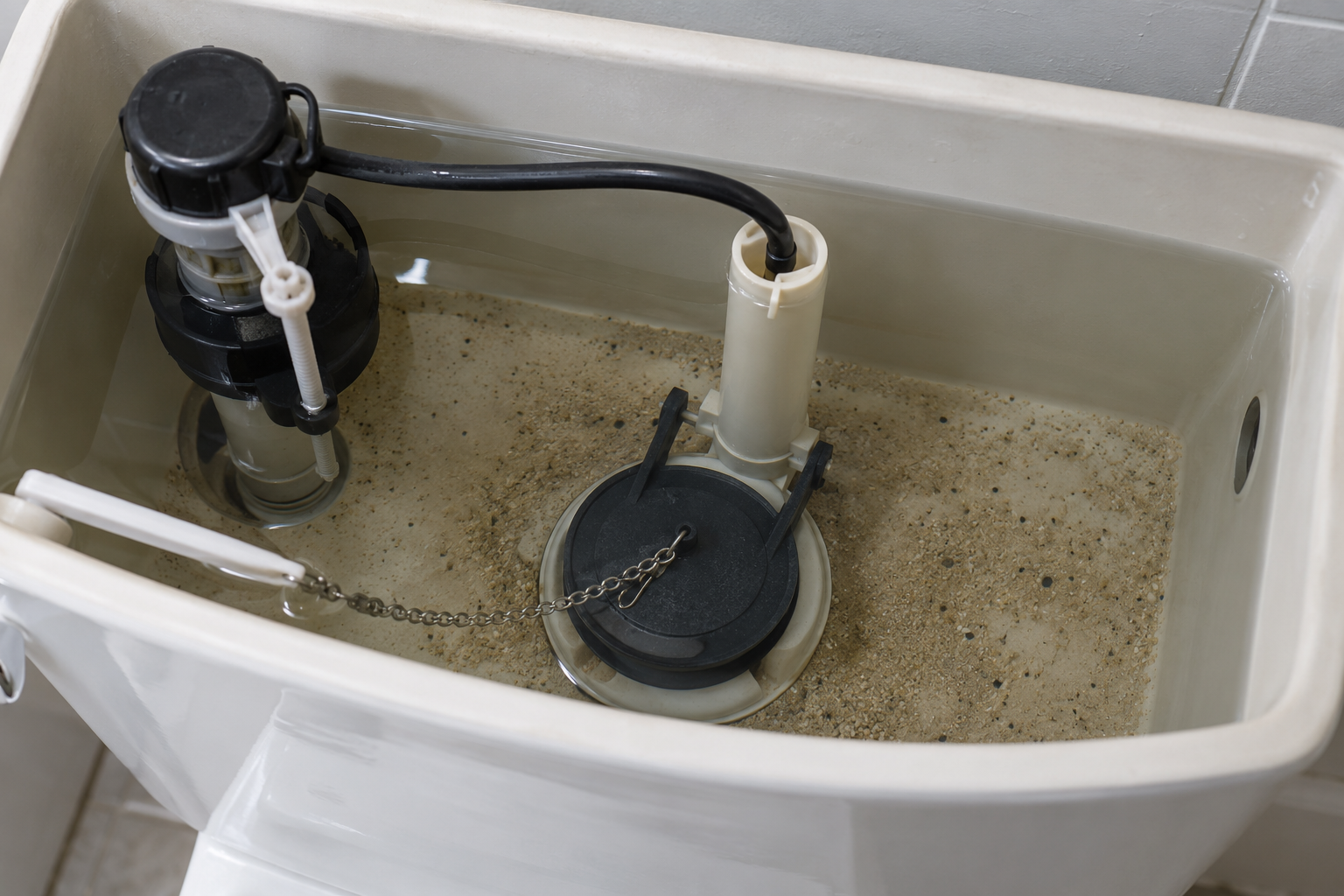
Choosing a sediment filter for well water
NDSU Extension says a whole-house sediment filter should be standard equipment in every home. It goes right after the pressure tank, so it protects everything downstream. Filters are rated by the size of particle they catch, in microns. The smaller the number, the finer the filter.
| Type of well | Suggested filter rating |
|---|---|
| Drilled well | 10 to 15 micron |
| Dug or bored well | As fine as 2 micron, because fine clay is common |
Ratings from NDSU Extension.
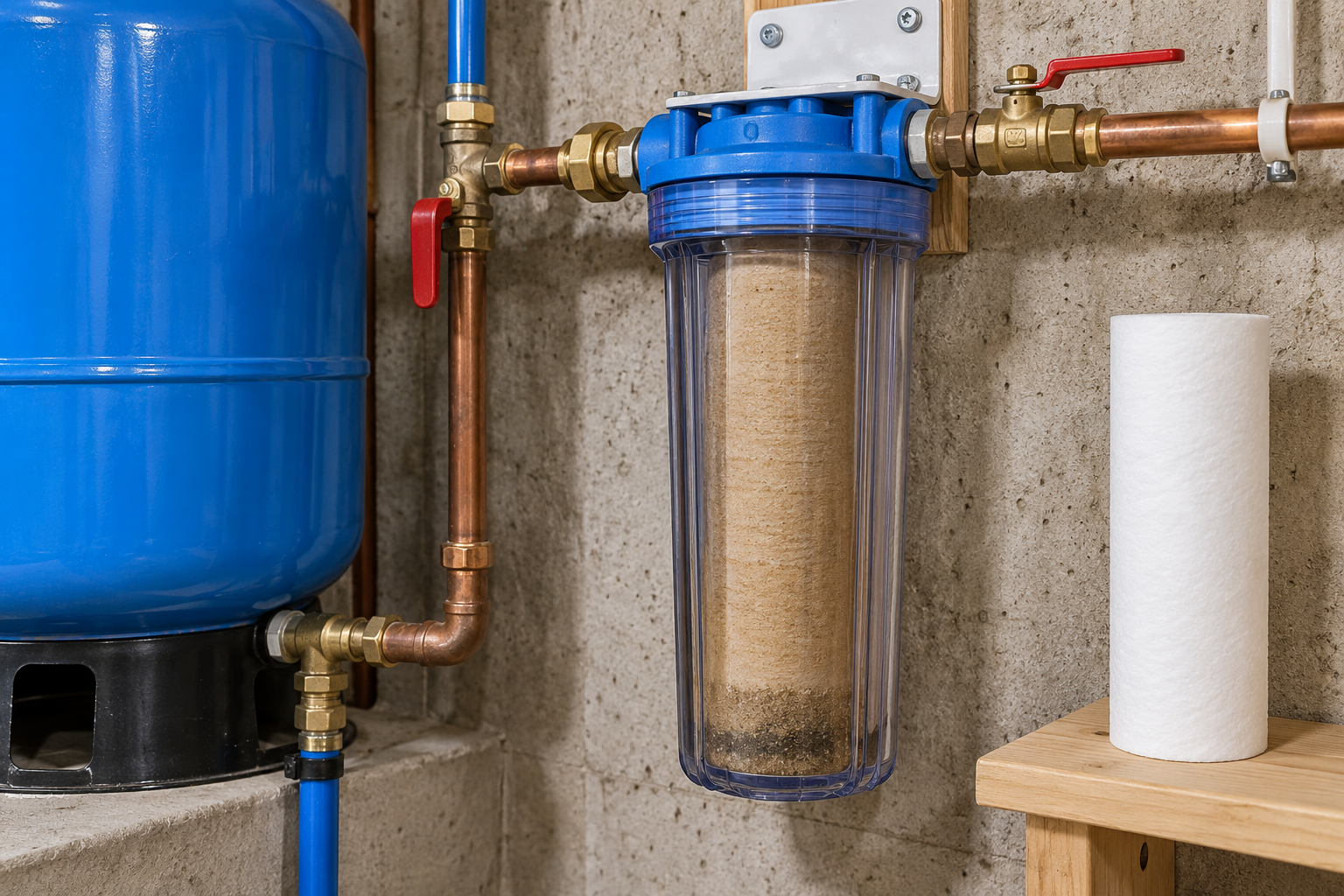
A filter protects your fixtures, but it doesn’t fix the well. If you find yourself changing cartridges every couple of weeks, the sand problem is getting worse, and the pump is taking the damage.
If it’s cloudy after rain
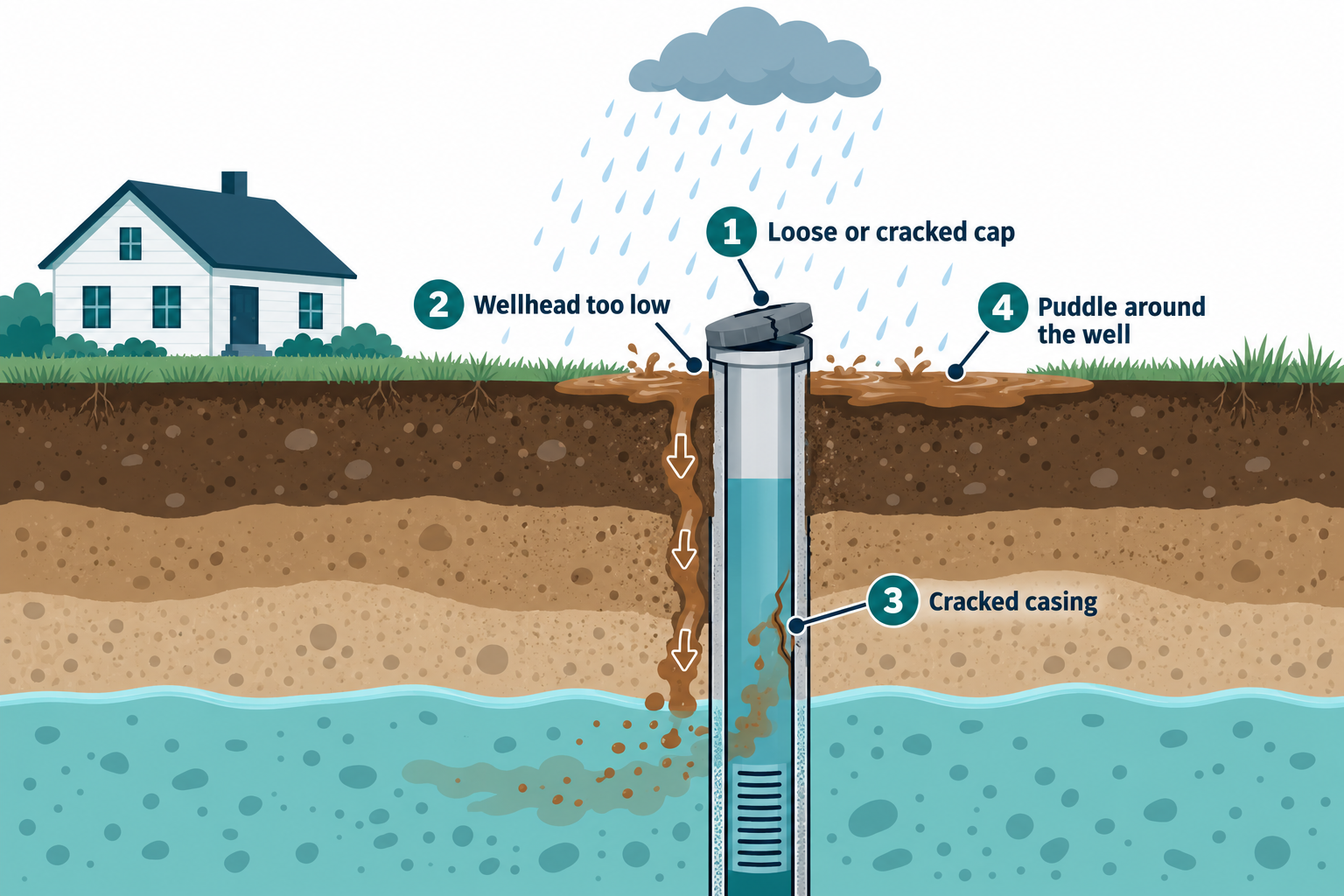
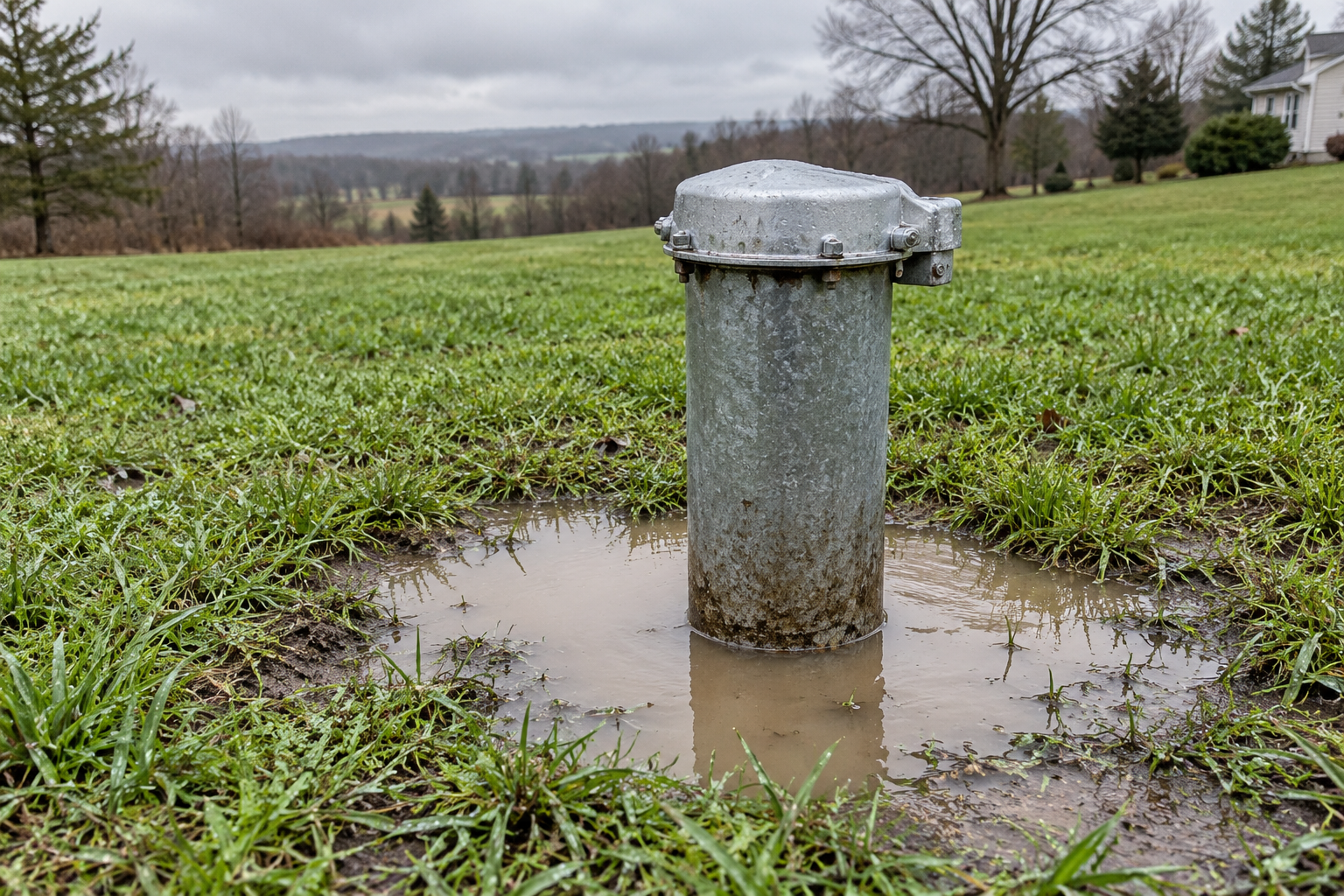
Cloudiness that shows up after storms or snowmelt usually means surface water is finding a way into the well. Common paths are a cracked casing, a loose or damaged cap, a failed seal or a wellhead that sits too low. UMass Amherst warns that runoff can bring high levels of bacteria into a well, and that even small dips around the wellhead that fill with water give bacteria a place to grow. The CDC recommends testing your well after flooding and any time the water’s color, taste or smell changes.
- Use bottled water for drinkingAlso use it for cooking, baby formula and brushing teeth until a test comes back clean.
- Test for total coliform and E. coliUse a state-certified lab.
- Inspect the wellheadCheck the cap, the casing and the ground around it. Our coliform guide has a full checklist.
- Fix the leak, then disinfectShock chlorinate the well after the repair, then retest.
Don’t just filter the cloudiness away. The New York State Department of Health notes that cloudy water can carry other contaminants along with it and can block chlorine and UV light from disinfecting the water. A filter clears the water but leaves the path for bacteria wide open.
If it’s a haze that won’t settle
A haze that stays in the glass for hours is usually very fine clay or silt, which is more common in dug and bored wells. Ask the lab to test for turbidity, which measures cloudiness, plus total dissolved solids and bacteria. New York recommends turbidity stay at or below 5 NTU. If bacteria come back clean, a fine sediment filter is often enough. If the haze comes and goes with the weather, treat it like the rain problem above.
How to keep your well from going cloudy
Penn State Extension and the CDC recommend this routine:
| Task | How often |
|---|---|
| Test for total coliform and E. coli | Every year |
| Look over the wellhead for damage | Every year |
| Test pH and total dissolved solids | Every 3 years (the CDC suggests yearly) |
| Professional well inspection | Every 10 years |
| Keep the area around the well clear of debris | Within 100 feet |
Keep an eye on how much water the well gives you, too. Penn State says a drop in yield of 25% or more usually means the well needs rehabilitation. Contractors use methods like wire brushing, high-pressure jetting and surging to clear out sediment and buildup.
Find a licensed well or pump contractor near you, verified against state records.
Cloudy well water: FAQ
Is cloudy well water safe to drink?
It depends on the cause. Air bubbles are harmless. Sand is mostly a pump problem. Cloudiness after rain can mean surface water and bacteria are getting in, so use bottled water until a bacteria test comes back clean.
Why is my well water cloudy all of a sudden?
Sudden cloudiness often follows heavy rain, snowmelt, work on the well or a pump problem. Do the glass test first. If it clears from the bottom up, it’s air. If it settles as grit or stays hazy, test for bacteria and turbidity and have the well checked.
Can sand in well water damage my pump?
Yes. Penn State Extension calls wear from pumping sand the leading cause of pump failure. Fixing the cause is usually cheaper than replacing a worn pump.
What micron sediment filter do I need for well water?
NDSU Extension suggests a 10 to 15 micron filter for drilled wells and a finer filter, down to 2 micron, for dug or bored wells where fine clay is common. Install it right after the pressure tank.
Sources: Penn State Extension, USGS, Minnesota Department of Health, NDSU Extension, New York State Department of Health, UMass Amherst and the CDC. Checked October 2026. General guidance; follow your state or county health department where it differs.