
Air in Well Water: Sputtering Taps and Milky Water
Taps that spit and bang, and water that looks milky but clears in a minute, mean air is getting into the system. It is either a leak on the suction side, a well being drawn down, or gas from the aquifer itself.
Likely causes
- Pump drawing the water level below the intake
- Leak in the drop pipe or a fitting on the suction side
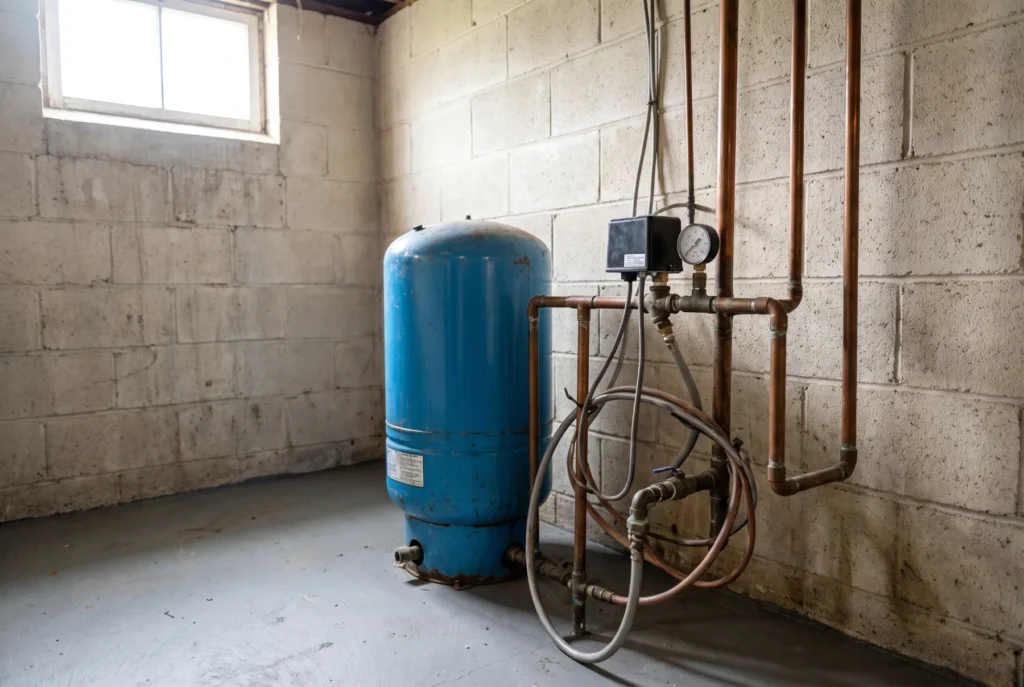
- Failed pressure tank bladder
- Methane or carbon dioxide in the aquifer
- Recent plumbing work
Tests to order
- Glass test for clearing direction
- Pressure tank air check
- Water level measurement
- Methane test in gas regions
Treatment options
- Lower the pump or reduce pump rate
- Repair the leaking fitting or pipe
- Replace the pressure tank
- Aeration and venting for methane
- Well vent screen
The one minute glass test
Fill a glass. Milky water that clears from the bottom up in a minute or two is air. Cloudiness that stays or settles is sediment, which is a different page. Once you know it is air, the question is where it is getting in.
Three ways air gets in
A well being pumped faster than it refills draws the water level down to the pump intake, and the pump gulps air along with water, usually after long runs like filling a tub or irrigating. A cracked drop pipe or a loose fitting above the water line lets air in every cycle. And a pressure tank with a failed bladder pushes its air charge into the plumbing, which also shows as short cycling on the gauge.
The one to take seriously
In coal, shale and oil regions, methane and carbon dioxide dissolve in groundwater and come out of solution at the tap. Methane is explosive as it collects in enclosed spaces. If you are in a gas-producing area and the water fizzes or the smell is faintly like gas, stop and order a methane test from a certified lab. Above 10 mg/L the well needs a vented cap and an aeration system that strips the gas outdoors, and above 28 mg/L it is an immediate hazard.
Why does the air only happen after long use?
The pump is drawing the water level down to the intake. Lowering the pump or installing a flow restrictor to slow the pump rate fixes it.
Can air in the water damage anything?
Water hammer from air pockets loosens fittings over time, and a pump that gulps air runs hot. Both are worth fixing.