
Low Water Pressure on a Well: Causes and Fixes
Low pressure on a well almost always comes from five parts: a clogged filter, the pressure tank, the switch, the pump or the well. Start with the free checks before you pay for a new pump.
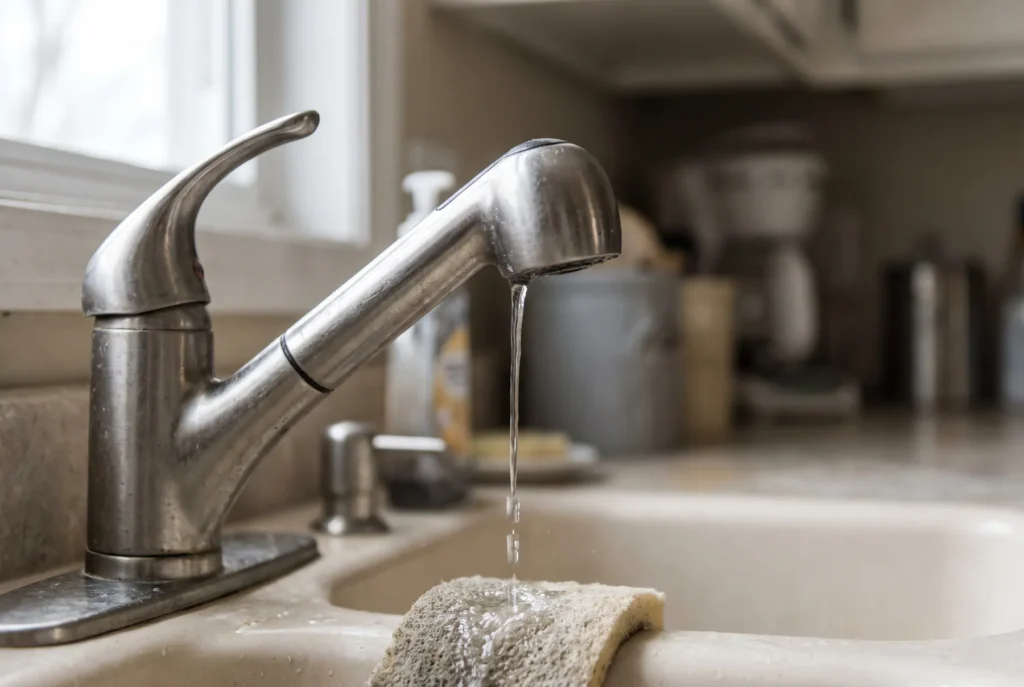
Likely causes
- Clogged sediment filter or aerators
- Waterlogged pressure tank
- Pressure switch set low or failing
- Worn or undersized pump
- Well that can't keep up
- Scale in the pipes
Tests to order
- Pressure gauge reading
- Tank air charge check
- Well yield from your well log
- Hardness and iron lab test
Treatment options
- Change the filter cartridge
- Recharge or replace the pressure tank
- Replace the pressure switch ($120 to $175)
- Constant pressure system
- Pump replacement
Short answer: low water pressure on a well almost always comes down to five parts: a clogged filter, the pressure tank, the pressure switch, the pump, or the well itself. Start with the free checks. Most people find the problem before they ever need to pay for a new pump.
Step 1: read the pressure gauge
Find the gauge near your pressure tank. Open a tap and watch it for a few minutes. The Water Systems Council says most home systems run between 30 and 50 psi or 40 and 60 psi.
| What the gauge does | What it usually means |
|---|---|
| Swings between the two settings, pump runs every minute or two | System is normal. Look at filters and pipes. |
| Pump clicks on and off every few seconds | Waterlogged pressure tank |
| Never climbs past about 30 psi | Switch set too low, or a worn pump |
| Starts fine, then fades during a long shower or watering | The well can’t keep up with the pump |
| Reads zero | No power to the pump, or the pump has failed |
Step 2: check the five usual suspects, cheapest first
- Aerators and sediment filterUnscrew a faucet aerator and check the whole-house filter cartridge. A plugged cartridge often causes a slow pressure drop. Cost: a new cartridge.
- Pressure tank air chargeTurn off the pump, drain the tank, and check the air valve on top with a tire gauge. Tank makers typically call for about 2 psi below the switch’s cut-in pressure. Water from the air valve means the bladder has failed.
- Pressure switchBurned or pitted contacts, or a setting that’s too low. Angi puts a replacement at $120 to $175 installed. Turn the power off at the breaker before touching it.
- The pumpA pump that runs but can’t build pressure may be worn. HomeGuide puts normal pump life at 8 to 15 years.
- The wellIf pressure fades after long use and recovers after a rest, the pump is drawing water down faster than the well refills.
What each fix costs
| Fix | Typical cost | Source |
|---|---|---|
| Filter cartridge | $5 to $30 each | HomeGuide |
| Pressure switch, installed | $120 to $175 | Angi |
| Tank bladder (part) | $50 to $100 | HomeGuide |
| New pressure tank, installed | $800 to $1,500 | HomeGuide |
| Constant pressure system | $1,300 to $5,000 | Angi, HomeGuide |
| Pump replacement | $974 to $2,821, average $1,897 | Angi |
Think the pump is the problem? Our well pump replacement cost calculator prices it for your depth and pump type.
When the parts are fine but pressure is still low
The National Ground Water Association’s well owner site points to two causes people miss:
The pump is too small
If your home needs 10 gallons a minute and the pump supplies 5, you get a trickle. This often shows up after adding a bathroom.
Scale in the pipes
Hard water leaves deposits that narrow the pipes and cut pressure, even with a healthy pump and tank.
How big should the pump be?
The Water Systems Council sizes a home pump by bathrooms:
| Bathrooms | Pump size needed |
|---|---|
| 1 | 7 gallons per minute |
| 2 to 2.5 | 14 gallons per minute |
| 3 to 4 | 17 gallons per minute |
A bigger pump can’t beat the well, though. If the well itself gives 5 gallons a minute, that’s the ceiling. Your well log shows the yield measured when it was drilled.
Ways to get steadier pressure
- A constant pressure valve on a standard pump. NGWA calls it a “good, economic solution.”
- More tank capacity helps with short bursts of heavy use, but not with several taps running at once.
- A variable speed pump adjusts to how much water you’re using, so pressure stays steady. Angi and HomeGuide put these systems at $1,300 to $5,000.
Find a licensed pump contractor near you, verified against state records.
Low well pressure: FAQ
Why is my well water pressure suddenly low?
A sudden drop usually points to a clogged filter, a failing pressure switch or a pressure tank that lost its air. A slow drop over months points more to a worn pump, scale in the pipes or a well that’s yielding less.
What should my well pressure be?
Most home systems run between 30 and 50 psi or between 40 and 60 psi, according to the Water Systems Council.
Can I just turn up the pressure switch?
A small adjustment is possible, but match the tank’s air charge to the new setting and check the pump can handle it. Pushing the pump beyond what it’s built for shortens its life. When in doubt, have a pump contractor do it.
How do I know if the pressure tank is bad?
The pump clicks on and off every few seconds, pressure swings at the tap, the tank sounds solid when you tap the top, or water comes out of the air valve.
Does a bigger pressure tank increase water pressure?
No. A bigger tank means the pump runs less often, but the pressure is still set by the switch. It helps with short bursts of use, not steady flow.
Is a constant pressure system worth it?
It keeps pressure steady when several taps run, which helps in larger homes. For pressure that’s simply too low, fix the tank, switch or pump first.
Checked October 2026. Costs are national ranges, not quotes.