
Manganese in Well Water: Black Stains, Black Specks and How to Fix Them
Black stains in the toilet, black specks in the water and a dark film in the shower usually mean manganese. Here is what causes it, the levels that matter for babies and adults, which tests to order, and the fix that fits your results.
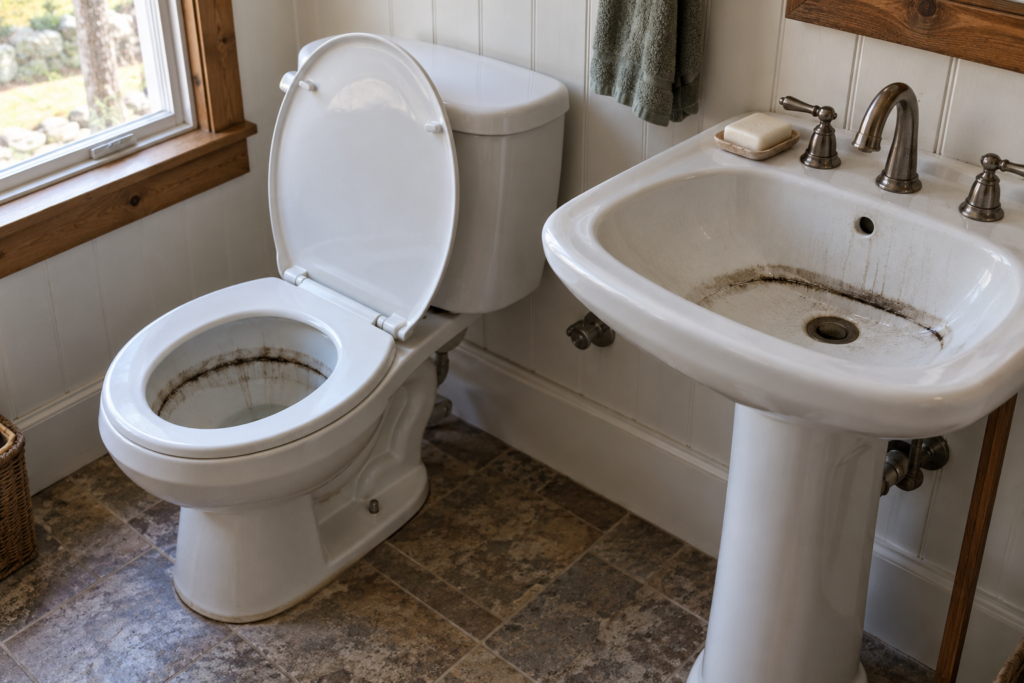
Likely causes
- Dissolved manganese from the rock and soil
- Manganese bacteria
- Manganese buildup in pipes
- water heater or softener
Tests to order
- Manganese
- Iron
- pH
- Hardness
Treatment options
- Water softener for low levels
- Oxidizing filter such as manganese greensand
- Chlorine feed plus filtration for high levels
- Reverse osmosis for drinking water
Short answer: black or dark brown stains in the toilet, black specks in the water and a dark film in the shower usually mean manganese in your well water. It is a natural metal that comes out of the rock and soil. Manganese stains even at low levels, and at higher levels it can be a health concern, especially for babies. A lab test tells you how much you have, and the result decides the fix: a water softener for low levels, or an oxidizing filter for higher ones.
Signs of manganese in well water
Manganese often hides in plain sight. Fresh water from the tap can look clear, because the manganese is dissolved. Penn State Extension explains that it turns into black particles once the water meets air, so the trouble shows up later, in places where water sits or dries.
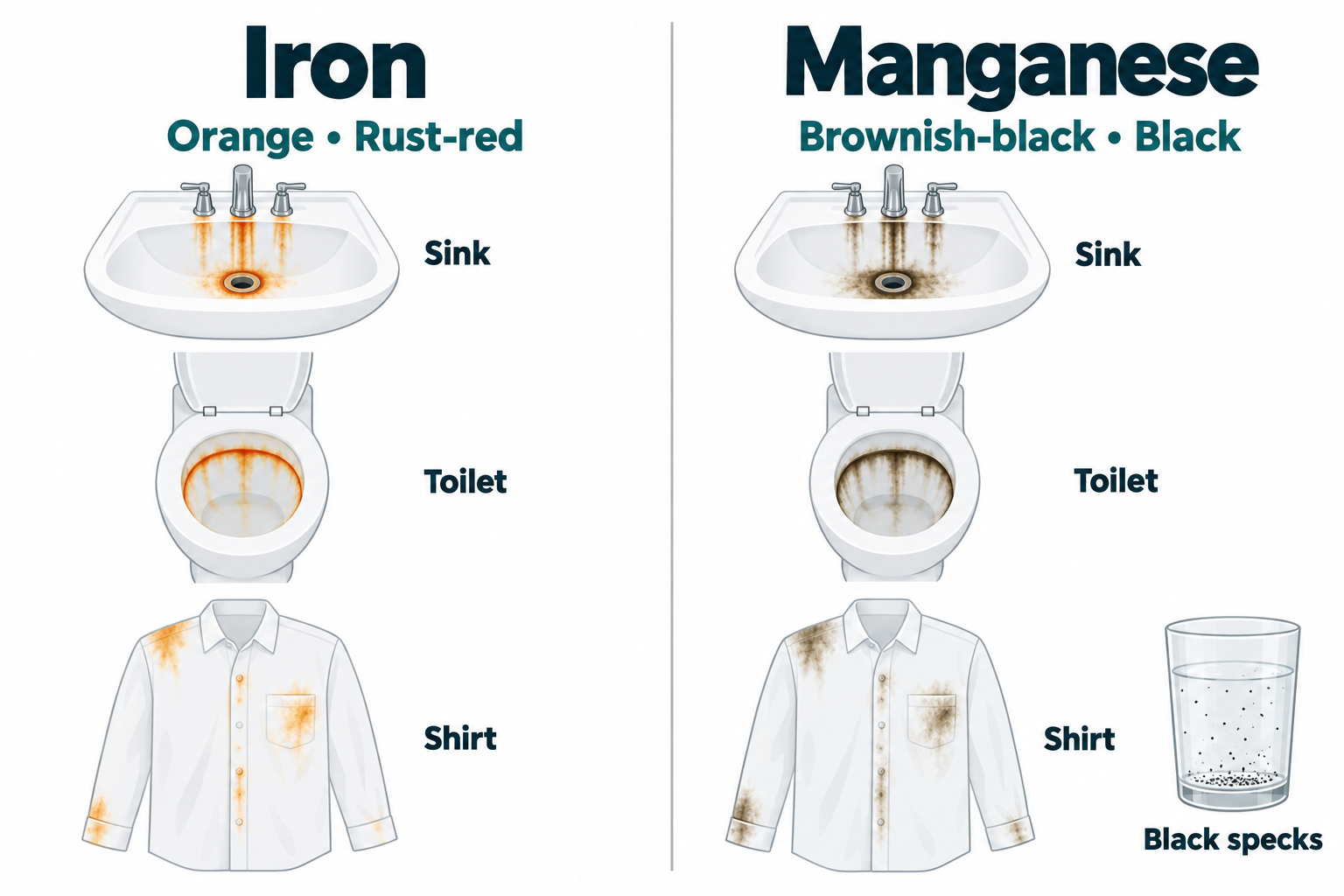
- Black or brownish-black rings in the toilet bowl and tank
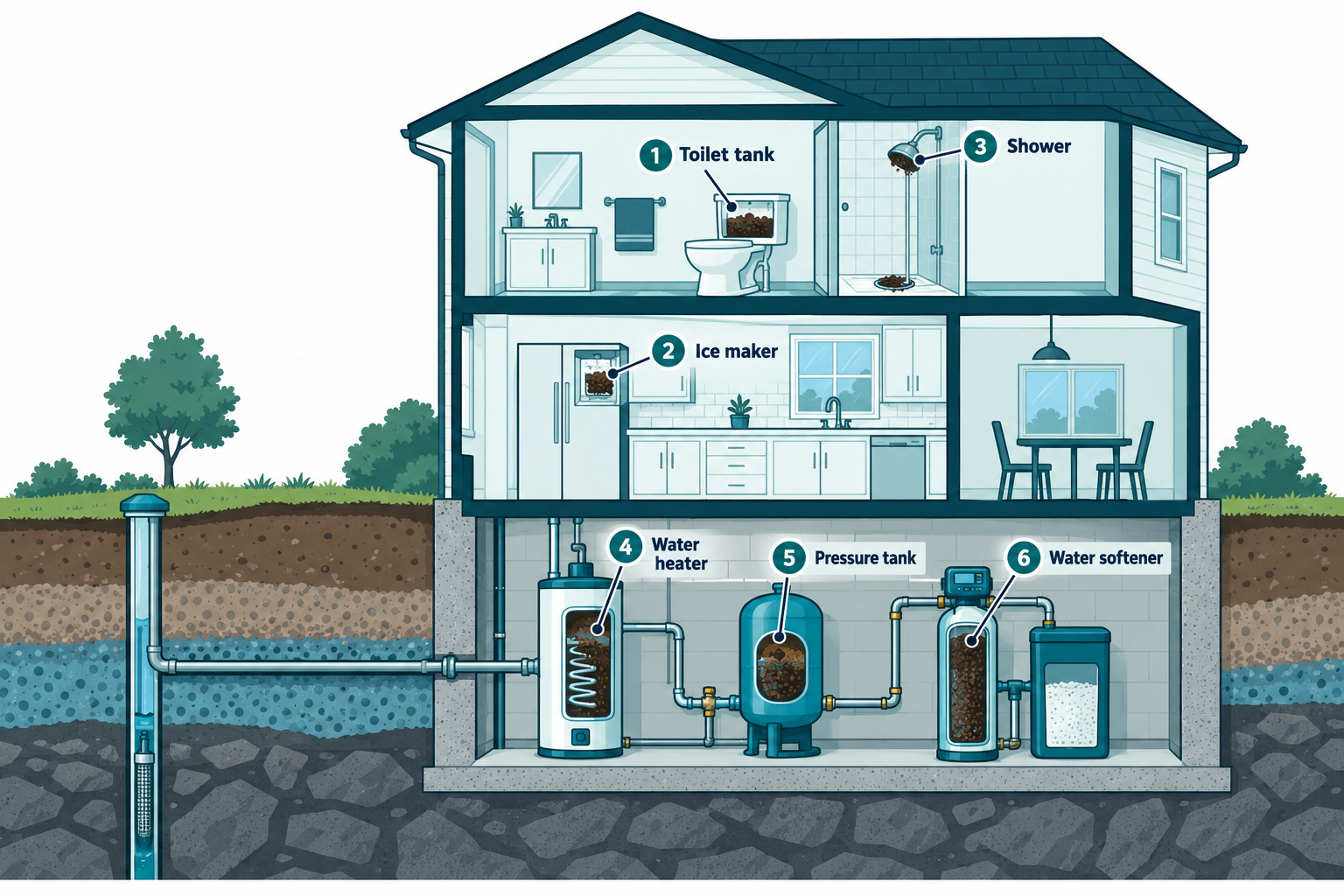
- Black specks in a glass of water or in the ice maker
- A dark film on the shower door, tub or sink
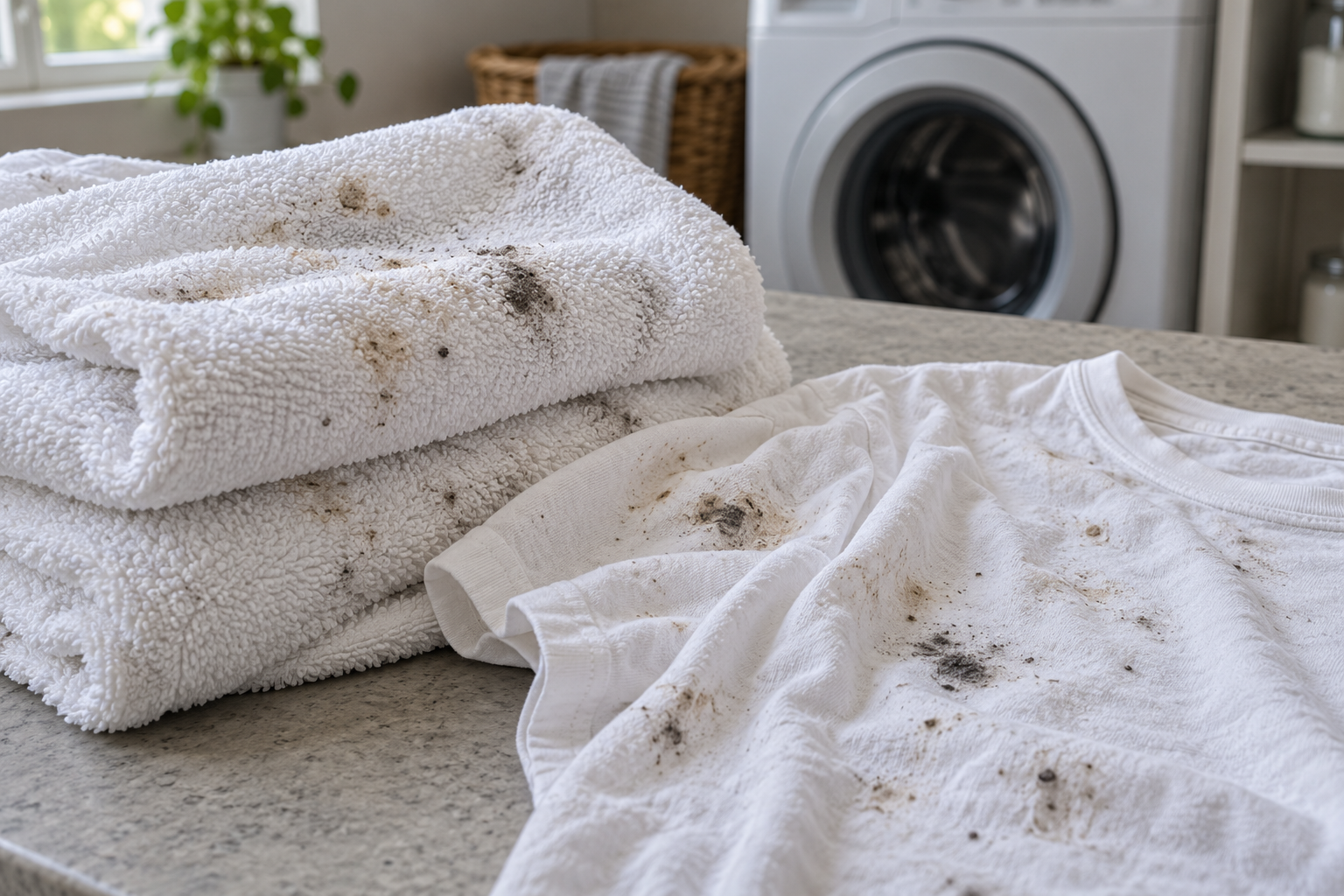
- Brown or gray spots on white laundry
- A bitter, metallic taste, most noticeable in coffee and tea
- Black slime where water stands, like the toilet tank
If the stains are orange or rusty instead of black, the main problem is iron. The two often show up together, so read our guide to orange and rust stains as well.
Where the manganese comes from
Manganese is part of many rocks and soils, and groundwater picks it up as it moves through them. Penn State notes it is more common in deeper wells, where the water spends more time in contact with rock. The USGS found the highest levels along the Mississippi River valley, the East Coast up to Maine and around the Great Lakes, often in areas with shallow water tables and soil rich in organic matter.
There are three ways it shows up in a home:
- Dissolved manganese from the aquifer. This is the most common cause and the one a filter is built for.
- Manganese bacteria. Virginia Tech Extension explains that manganese can feed bacteria that leave a black-brown slime in toilet tanks and other places where water stands.
- Buildup inside the system. Manganese collects in pipes, pressure tanks, water heaters and softeners. When it breaks loose, you get sudden bursts of black water or specks.
Is manganese in well water safe to drink?
At low levels, manganese is a nuisance, not a health risk. Your body needs a small amount of it. The concern starts at higher levels over a long time. The Minnesota Department of Health says too much manganese may cause problems with memory, attention and motor skills, and that babies may develop learning and behavior problems.
| Manganese level | What it means |
|---|---|
| Under 0.05 mg/L | Below the EPA’s secondary standard. Light staining is still possible. |
| 0.05 to 0.1 mg/L | Above the secondary standard. Staining is possible, but it is fine to drink for most people. |
| Over 0.1 mg/L | Stains and a bitter taste are likely. Above Minnesota’s guidance for babies who drink tap water or formula. |
| Over 0.3 mg/L | Above the EPA lifetime health advisory. Treat the water or use another source for drinking and cooking. |
| Over 1 mg/L | Above the EPA short-term advisory for adults. Stop drinking it until it is treated. |
Levels from the U.S. EPA Drinking Water Health Advisory for Manganese and the Minnesota Department of Health.
Showers and baths are fine. Massachusetts state guidance notes that manganese is poorly absorbed through the skin.
What to test for
Order these four together. The treatment that works depends on all of them, not just the manganese number.
| Test | Why it matters |
|---|---|
| Manganese | Tells you if the water is safe to drink and how strong the treatment needs to be |
| Iron | Treatment is sized on iron and manganese combined |
| pH | Softeners and some filters only remove manganese above a certain pH |
| Hardness | Decides whether a softener is a good fit |
A state-certified lab can run all four from one sample. Find one near you in our lab finder.
How to remove manganese from well water
The right system depends on how much iron and manganese you have combined. Here is how Virginia Tech and Penn State Extension match the equipment to the numbers:
| Treatment | Works best for | Good to know |
|---|---|---|
| Water softener | Combined iron and manganese of 5 mg/L or less | Penn State says the pH should be above 6.7. It also removes hardness. |
| Oxidizing filter (such as manganese greensand) | Combined levels up to about 10 to 15 mg/L | Turns dissolved manganese into particles and traps them. Needs regular regeneration. |
| Chlorine feed plus filtration | Combined levels above 10 mg/L | Also handles manganese bacteria. Usually installed by a pro. |
| Reverse osmosis at the kitchen tap | Drinking and cooking water only | A good choice for formula. Massachusetts guidance notes a plain carbon filter does not remove manganese. |
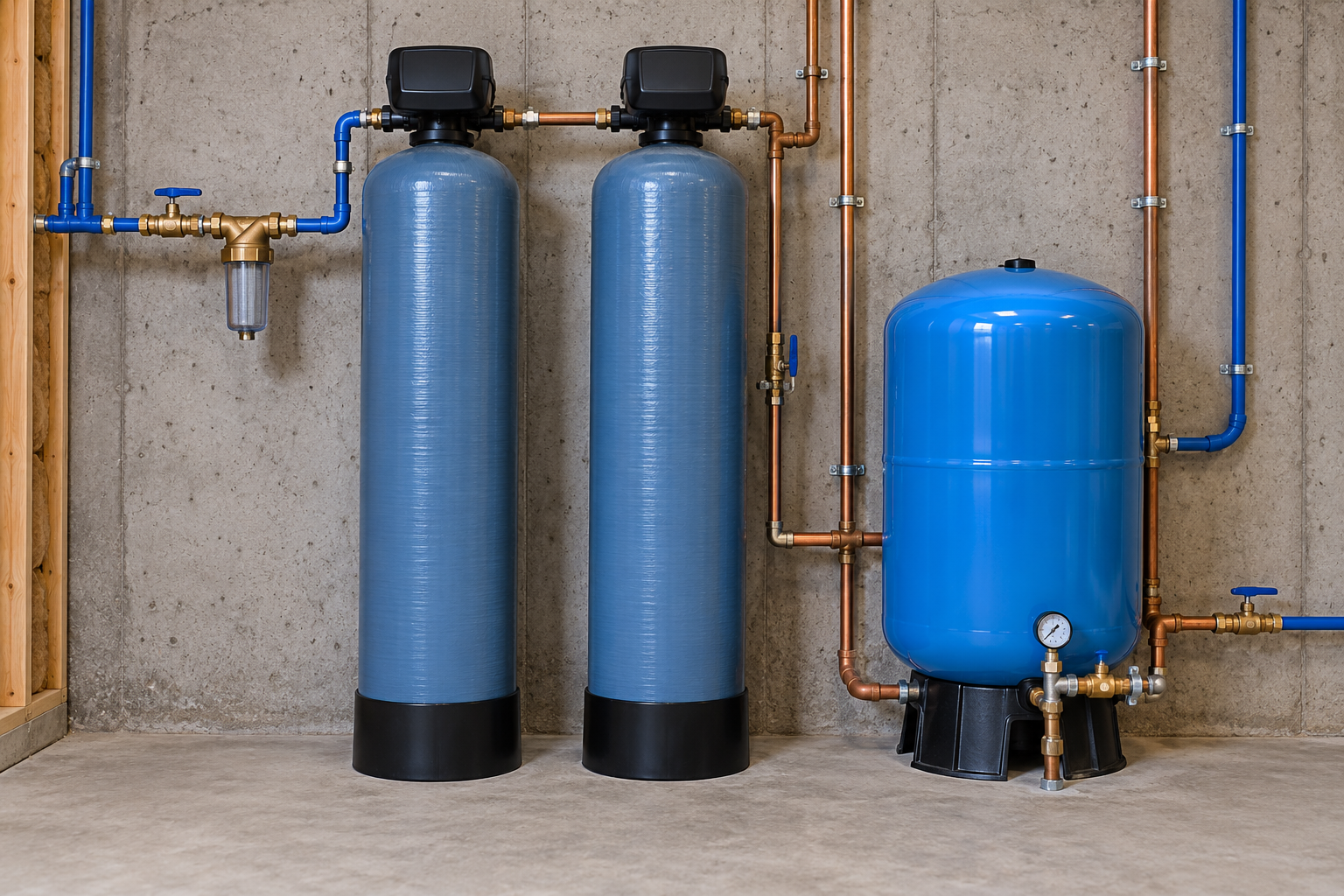
If you see black slime, start with a shock chlorination to kill the manganese bacteria, then add the filter. Some filters also need a higher pH to work. Penn State notes Birm media needs a pH of at least 7.5, so acidic water may need a neutralizer first. Our treatment planner can match equipment to your lab results.
Find licensed water treatment contractors near you, verified against state records.
Manganese in well water: FAQ
What causes black stains in the toilet from well water?
Black or brownish-black stains are almost always manganese. It comes out of the rock and soil around your well, stays dissolved in the water, and turns into black deposits when it meets air in the toilet bowl and tank.
How do I get rid of manganese in well water?
Start with a lab test for manganese, iron, pH and hardness, because those four numbers decide the fix. If iron and manganese together are 5 mg/L or less and the pH is above about 6.7, a water softener can remove it. For higher levels, up to about 10 to 15 mg/L combined, an oxidizing filter such as manganese greensand is the usual choice. Above 10 mg/L, chlorine or air injection followed by a filter works best. If you see black slime, shock chlorinate the well first to kill the manganese bacteria. For drinking water and baby formula, a reverse osmosis filter at the kitchen tap adds extra protection. Boiling and plain carbon filters will not remove manganese. Retest the water after the system is installed to make sure it is working.
Why are there black specks in my well water?
Black specks are usually manganese that has turned solid and broken loose from your pipes, water heater, pressure tank or softener. Test for manganese and iron to confirm it.
Can I use well water with manganese for baby formula?
Not until you know the level. The Minnesota Department of Health recommends 0.1 mg/L or less for babies, and boiling does not remove it. Use bottled water or a reverse osmosis filter until a test shows the water is safe.
Will a water softener remove manganese?
Sometimes. A softener works when the combined iron and manganese is 5 mg/L or less and the pH is above about 6.7. For higher levels, you need an oxidizing filter.
Sources: U.S. EPA, USGS, Minnesota Department of Health, Penn State Extension, Virginia Tech Extension and Mass.gov. Checked October 2026. General guidance; follow your health department and lab where they differ.