
Orange and Rust Stains From Well Water
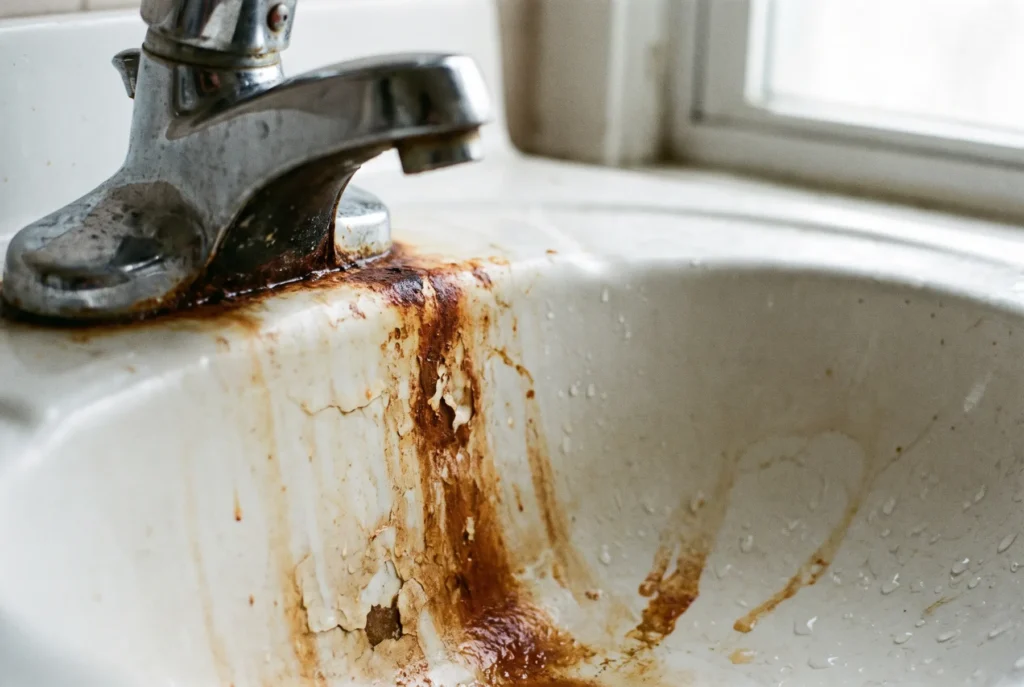
Orange streaks in the sink, rust rings in the toilet and laundry that comes out yellow all point to dissolved iron. It is the most common well water complaint in the country and one of the easiest to treat once you know the form it takes.
Likely causes
- Dissolved ferrous iron from the aquifer
- Iron bacteria in the well
- Corroding steel casing or galvanized pipe
- Manganese alongside iron
Tests to order
- Iron
- Manganese
- pH
- Hardness
- Iron bacteria check
Treatment options
- Water softener for low levels
- Oxidizing iron filter
- Aeration plus filtration
- Shock chlorination for iron bacteria
Three kinds of iron, three different fixes
Clear water that turns orange after it sits is dissolved (ferrous) iron. Water that comes out of the tap already orange or with rust particles is oxidized (ferric) iron, often from an old steel casing. Slimy orange or brown deposits in the toilet tank mean iron bacteria. The treatment that works for one can fail for another, which is why so many people buy the wrong filter first.
The test that tells you which
A basic lab panel reports iron in milligrams per liter. Staining starts around 0.3 mg/L, the federal secondary limit. Ask for manganese and pH on the same sample: manganese leaves black stains and travels with iron, and pH decides which filter media will work. Lift the lid of the toilet tank. A rust-colored slime or floating film is iron bacteria, and no filter alone will handle that.
Sizing the fix
Under about 3 mg/L with soft-to-moderate hardness, a water softener removes dissolved iron as a side effect. Between 3 and 10 mg/L, or when the water is already orange, you need an oxidizing filter: air injection, manganese greensand or catalytic media, $800 to $2,500 installed. Above 10 mg/L, or with iron bacteria, pair aeration or chlorine injection with a filter. Iron bacteria start with a shock chlorination of the well and usually need a repeat every year or two.
Is iron in well water harmful?
Not at the levels found in wells. Iron is a nuisance contaminant: stains, metallic taste, clogged aerators and rust in the water heater. The manganese that often comes with it is a health concern for infants above 0.3 mg/L.
Why does my white laundry turn yellow?
Chlorine bleach oxidizes dissolved iron in the wash water and sets it into the fabric. Use an iron-removing laundry additive until the water is treated, and skip the bleach.