
Well Water Smells Musty, Earthy or Moldy? Causes and How to Fix It
A musty or earthy smell in well water is usually bacteria in the drain, the well or an old filter, not mold. Here is the two-minute test that finds the source, which tests to order, and the steps that clear it up.

Likely causes
- Bacteria growing in the sink drain
- Iron bacteria in the well or pressure tank
- Bacteria growing in a carbon filter or softener
- Surface water reaching a shallow or damaged well
Tests to order
- Total coliform bacteria
- Iron and manganese
- Iron bacteria check
Treatment options
- Clean and disinfect the drain
- Replace filters and sanitize the softener
- Shock chlorination of the well and plumbing
- Activated carbon filter
Short answer: a musty, earthy or moldy smell in well water almost always comes from bacteria, not mold. The usual sources are bacteria living in the sink drain, iron bacteria in the well or pressure tank, or an old filter or softener that bacteria have moved into. The smell itself is not harmful, but it can mean surface water is reaching your well, so test for coliform bacteria. Most cases clear up with a simple glass test, a shock chlorination and fresh filters.

Start with the glass test: is it the water or the drain?
The University of Georgia Extension says the most common cause of a musty smell at the sink is old organic matter inside the drain, not the water. This two-minute test tells you which one you have.
- Fill a glass from the cold tapUse the sink where the smell is strongest.
- Walk away from the sinkGo to another room, away from the drain.
- Swirl the water and smell itNo smell means the problem is the drain. A musty smell in the glass means it is in the water.
- Repeat with untreated waterFill a glass from a tap that comes before your filter or softener, often an outside spigot or the tap near the pressure tank. This shows whether the smell starts in the well or in your equipment.
| What you find | Where the smell is coming from | What to do |
|---|---|---|
| The sink smells, but the glass does not | The drain | Clean, disinfect and flush the drain |
| Treated water smells, untreated water is fine | A filter, softener or pressure tank | Replace filters and sanitize the equipment |
| Every tap smells, including untreated water | The well | Test the water, then shock chlorinate |
| Only the hot water smells, like rotten eggs | The water heater | See our rotten egg smell guide |
What causes a musty or earthy smell in well water

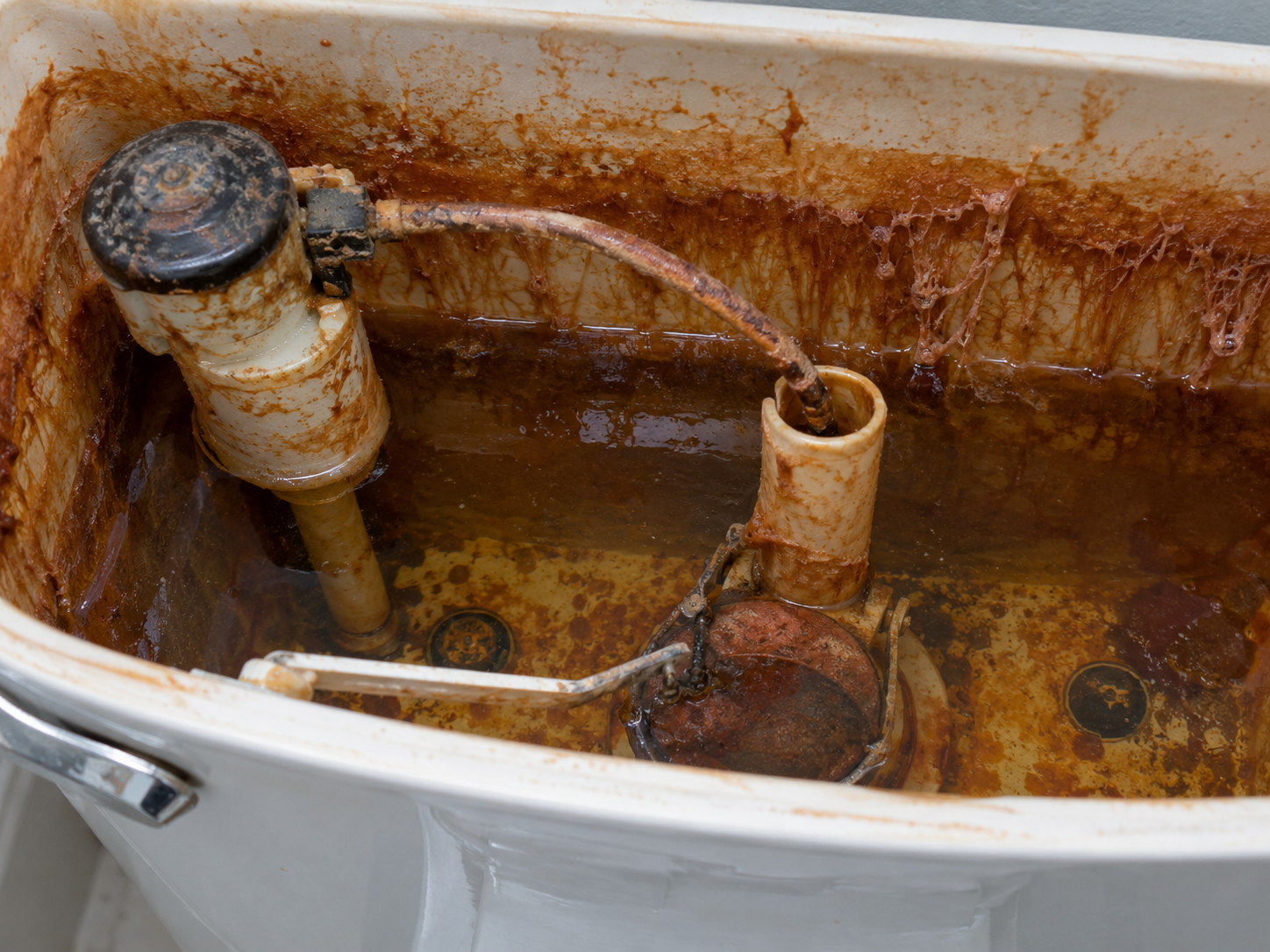
Iron bacteria. These are tiny organisms that feed on iron and manganese in groundwater. The Minnesota Department of Health says they can make water smell musty, swampy, like rotten vegetation or even like cucumbers, and the smell is often strongest after the water has been sitting for a while. Other signs are orange or brown slime in the toilet tank, rusty stains and an oily-looking sheen on standing water. They often get into a well during drilling or repair work.
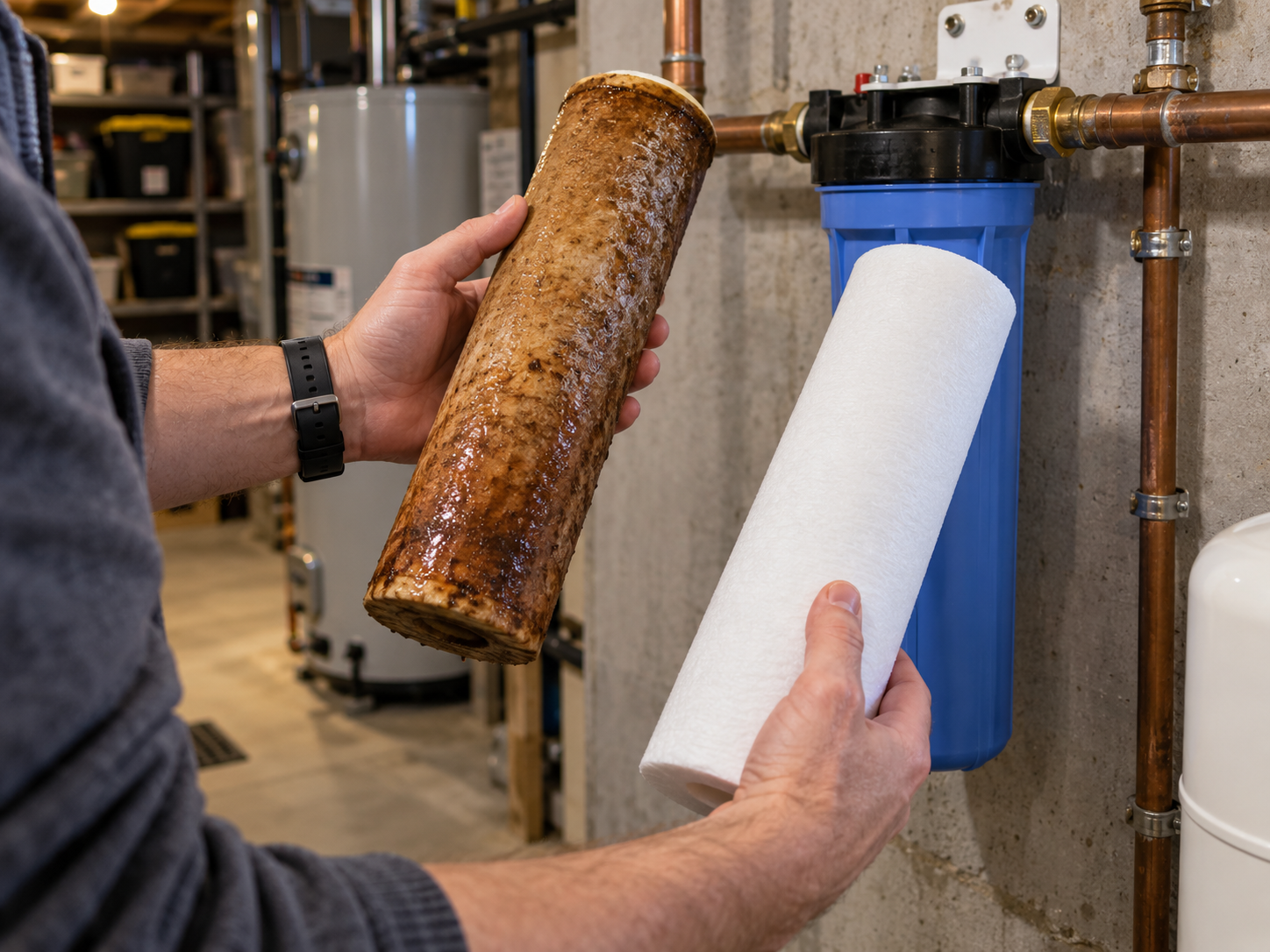
Filters, softeners and the pressure tank. A carbon filter traps organic matter, and NDSU Extension warns that a filter full of it, or one that sits unused, becomes food for bacteria. The Connecticut Department of Public Health says the same thing about larger carbon tanks, and UGA lists the pressure tank as another place a musty smell can start.
Surface water getting into the well. Soil bacteria and blue-green algae make two compounds, geosmin and 2-MIB, that smell like wet dirt. The USGS says people can smell geosmin at just 2 to 10 parts per trillion, so it only takes a little. In a shallow well, or one with a damaged cap, earthy water can mean surface water is leaking in.
Is musty well water safe to drink?
The smell on its own is not a health risk. The USGS calls geosmin and 2-MIB “nuisance” compounds that are not harmful, and Penn State says iron bacteria are more of a nuisance than a health hazard. The Minnesota Department of Health adds one warning: iron bacteria can create conditions where harmful germs grow more easily.
The bigger question is how the smell got there. If surface water is reaching your well, disease-causing bacteria can come in with it, and UMass Amherst points out that you cannot see, smell or taste them. That is why a coliform test matters more than the smell itself.
Which tests to order
| Test | Why it matters |
|---|---|
| Total coliform bacteria | Shows whether surface water is getting into the well. Test once a year anyway. |
| Iron and manganese | Iron bacteria feed on both. High levels make iron bacteria much more likely. |
| Iron bacteria check | The Minnesota Department of Health says a lab test is the only way to confirm them. |
You can find a state-certified lab near you in our lab finder.
How to get rid of the musty smell
Work through these in order. Many homes never need step five.
- Fix the drain if that’s the sourceClean, disinfect and flush it. If the glass test was clean, you are done.
- Replace filters and sanitize the softenerPut in new cartridges or new carbon and run the softener through the cleaning cycle its maker recommends.
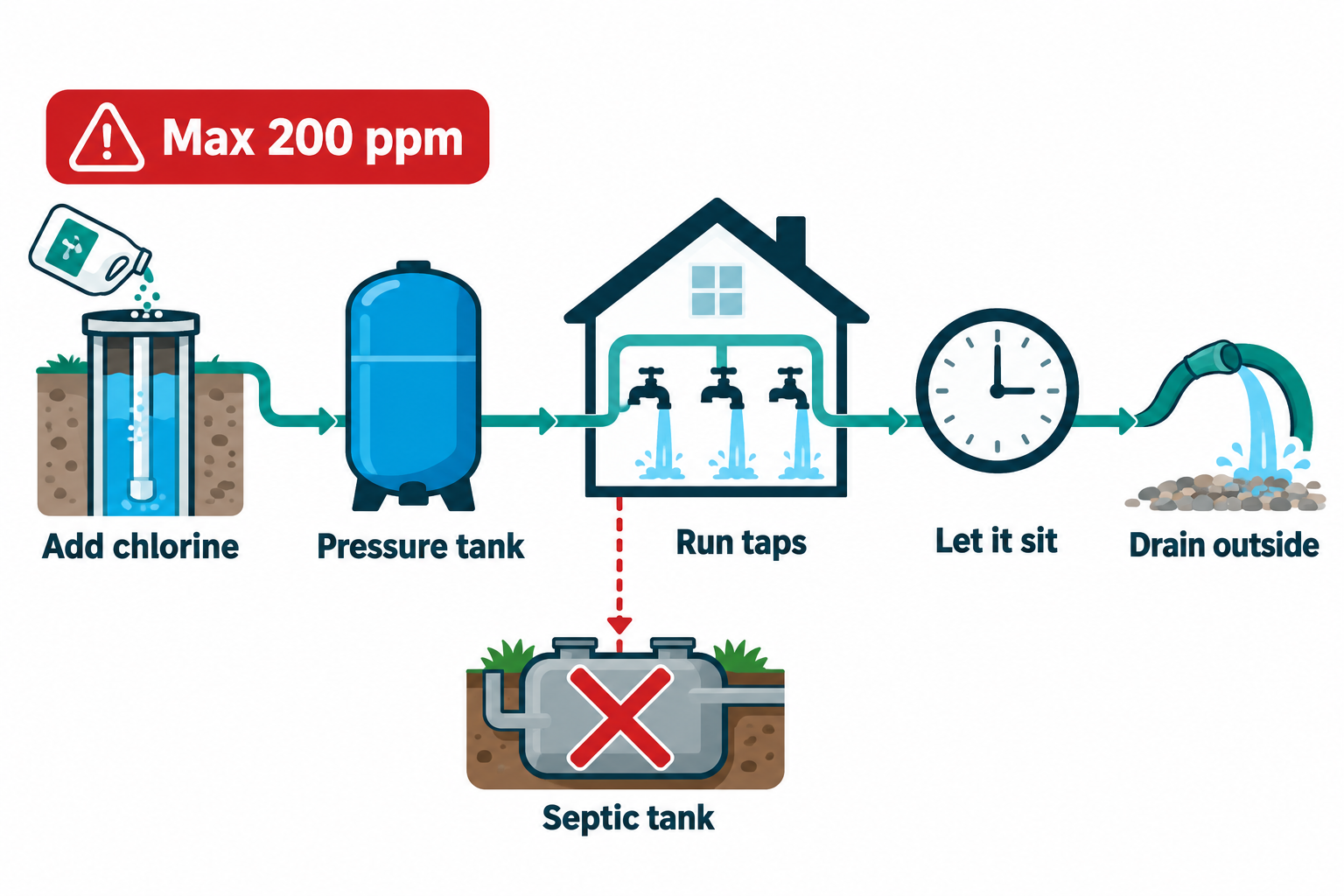
- Shock chlorinate the well and plumbingKeep the chlorine close to, but not over, 200 ppm. Run every tap until you smell chlorine, let it sit, then flush the strong water outside, away from the septic system.
- Retest for coliformWait until the chlorine is gone, then test again to make sure the well is clean.
- Add a carbon filter if the smell comes backUGA recommends activated carbon for musty water from the well. NDSU says to change it every 3 to 6 months, since an old filter can grow bacteria.
Iron bacteria are hard to get rid of completely, because their slime protects them from chlorine. If the smell keeps coming back, don’t shock the well more than once every six months. Instead, Penn State suggests asking a contractor about scrubbing the well, a chlorine feeder or a whole-house filter. Our treatment planner can help you size the equipment from your lab results.
Find licensed well and water treatment contractors near you, verified against state records.
Musty well water: FAQ
Is the musty smell in my water caused by mold?
Almost never. The earthy, moldy smell comes from compounds made by soil bacteria and algae, or from iron bacteria. It smells like a damp basement, but it is not mold growing in your water.
Why is the smell worse in the morning or after a trip?
Water that sits still in the well, pipes or filter gives bacteria time to build up. The Minnesota Department of Health notes that iron bacteria smells are often strongest after the water has not been used for a while. Run the taps for a few minutes and the smell usually fades.
Can I drink well water that smells musty?
The smell itself is not harmful, but test for coliform bacteria before you trust it. A musty smell can mean surface water is reaching the well, and harmful bacteria have no smell at all.
How often can I shock chlorinate my well?
Penn State Extension advises no more than every six months, because frequent shocking can damage the well and plumbing. If the smell returns sooner than that, ask a licensed contractor about other treatment.
Sources: USGS, Minnesota Department of Health, Penn State Extension, University of Georgia Extension, NDSU Extension, UMass Amherst and the Connecticut Department of Public Health. Checked October 2026. General guidance; follow your health department and lab where they differ.