
Well Running Dry or Losing Water
Water that sputters, runs fine then quits, or comes back after an hour is a well that cannot keep up. Sometimes the water table dropped. Sometimes the well is clogging. Sometimes it is only a pump set at the wrong depth.
Likely causes
- Drought or a falling water table
- Pump set too high in the well
- Screen or fractures clogged with mineral or bacteria
- Neighboring wells or irrigation pumping the aquifer down
- Casing collapse
Tests to order
- Static and pumping water level measurement
- Yield or drawdown test
- Well log review
- Downhole camera inspection
Treatment options
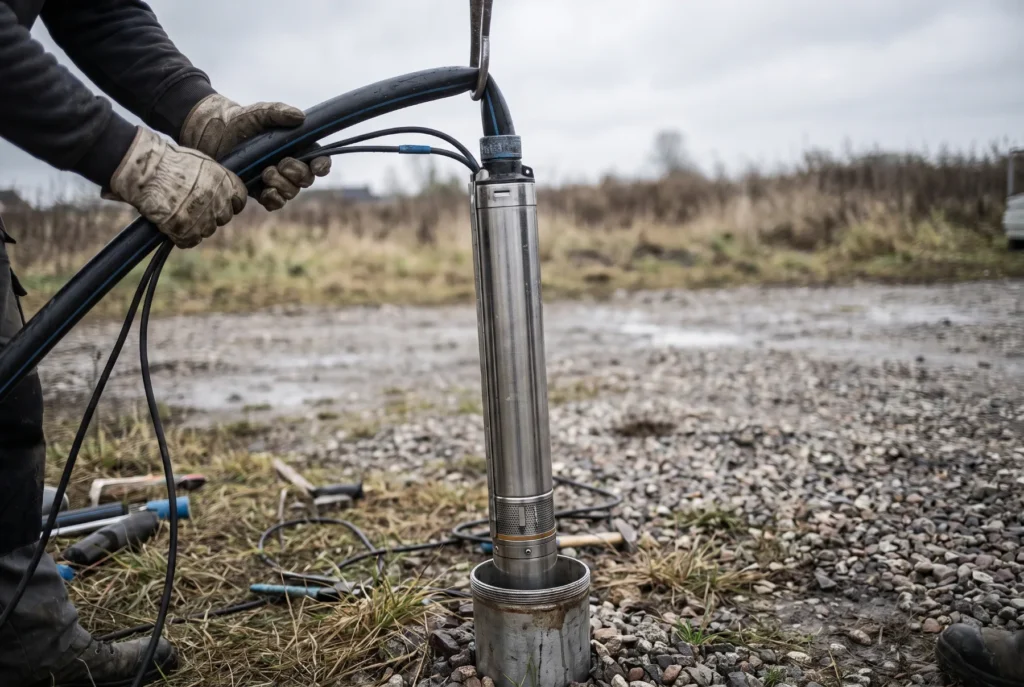
- Lower the pump
- Add a low-water cutoff
- Hydrofracturing to reopen fractures
- Well rehabilitation and cleaning
- Deepen or drill a new well
Measure before you spend
A pump installer drops a sounder into the well to read two numbers: the static water level when the pump is off and the pumping level after running it for an hour. The distance between them, the drawdown, and how fast it recovers tell you whether the aquifer is short on water or the well is not letting it in. Compare with the depth on the original well log, which most states keep on file.
The four fixes, from cheapest to last resort
If the pump sits well above the bottom, lowering it 20 to 40 feet gives more storage in the casing and often ends the problem, a few hundred dollars. If the well recovers slowly because the fractures or screen are plugged with mineral scale or bacteria, a chemical rehab cleans it, and in bedrock wells hydrofracturing pumps water at high pressure to reopen fractures, $2,000 to $6,000, with good odds of a lasting gain. If the water table has dropped for good, deepening the existing well or drilling a new one is the answer, and a good driller will look at neighboring well logs first to predict depth.
Protect the pump meanwhile
A pump that runs dry destroys itself. A low-water cutoff device, sometimes called a pump saver, senses dry running and shuts the pump off for a set time, $150 to $400 installed. Install one now whatever the long-term fix is.
Is my well dry for good?
Rarely. Most low-yield wells recover overnight and are suffering from drawdown, not a dry aquifer. The measurements above tell the difference.
Can I add a storage tank?
Yes. A cistern filled slowly from a low-yield well with a second pump to the house turns a 2 gallon per minute well into a normal household supply.